
Woodlouse (Oniscus asellus)
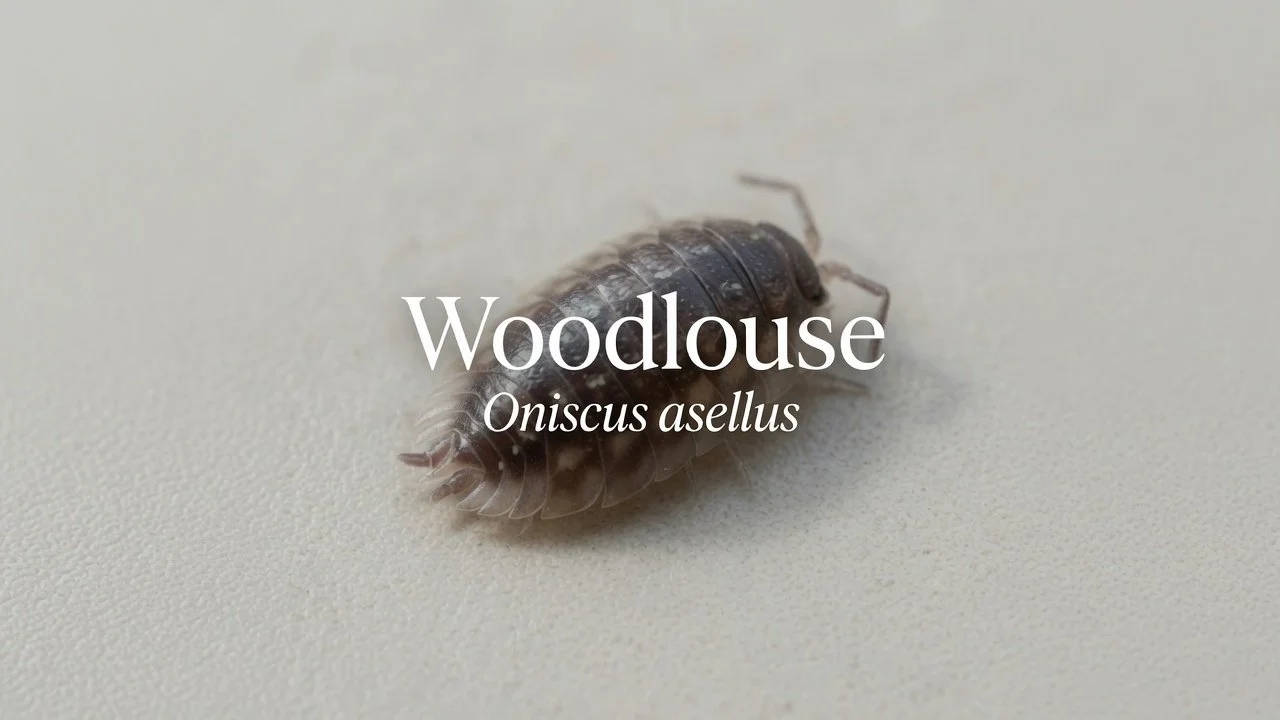
Quick Facts
Size: About ¼ to ½ inch long
Color: Dark gray to bluish-gray
Body: Segmented and oval; can roll into a tight ball
Legs: Seven pairs
Active: Prefer dark, moist areas
Common Locations: Basements, crawl spaces, under objects near foundations, mulch beds
AKA: Rolly Polly, Potato Bug, Pill Bug, Sow Bug
Identification
Woodlice are small, oval, segmented crustaceans (not insects) that can roll into a complete ball when disturbed. They have a hard, armor-like exterior and seven pairs of short legs. They are often confused with sowbugs, which cannot roll into a ball as tightly.
Biology & Life Cycle
Woodlice breathe through gill-like structures and require moisture to survive. They feed on decaying plant material and organic matter. Females carry eggs in a pouch under their body. They are most active at night and tend to cluster in damp locations.
Habitat
In southeastern Wisconsin they are commonly found under mulch, leaf litter, rocks, boards, and in damp basements or crawl spaces. They often enter homes through foundation gaps or door thresholds when outdoor conditions become too dry or too wet.
Signs of Presence
Small gray “bugs” that roll into a ball when touched
Clusters under objects or in damp corners of basements
Occasional sightings near foundation walls or in lower-level rooms
Health & Damage Concerns
Woodlice are completely harmless to people, pets, and structures. They do not bite, sting, or spread disease. Their presence is mainly a nuisance and often signals excess moisture near the foundation or inside the home.
Prevention
Reduce moisture around the foundation and in the basement
Keep mulch and leaf litter pulled back from the foundation
Seal gaps and cracks in the foundation and around doors
Improve drainage and keep gutters clean
Use a dehumidifier in damp basements or crawl spaces
When Professional Help Is Useful
When woodlice are repeatedly found indoors in noticeable numbers, a professional can help locate moisture sources and entry points that are allowing them to move inside.
Local Notes – Southeastern Wisconsin
Woodlice (rolly pollies) are very common throughout southeastern Wisconsin. They thrive in the region’s damp soil, mulch beds, and older homes with moisture issues. They are frequently seen in basements and near foundations, especially after rain or during humid periods.