
Wood Tick (Dermacentor variabilis)
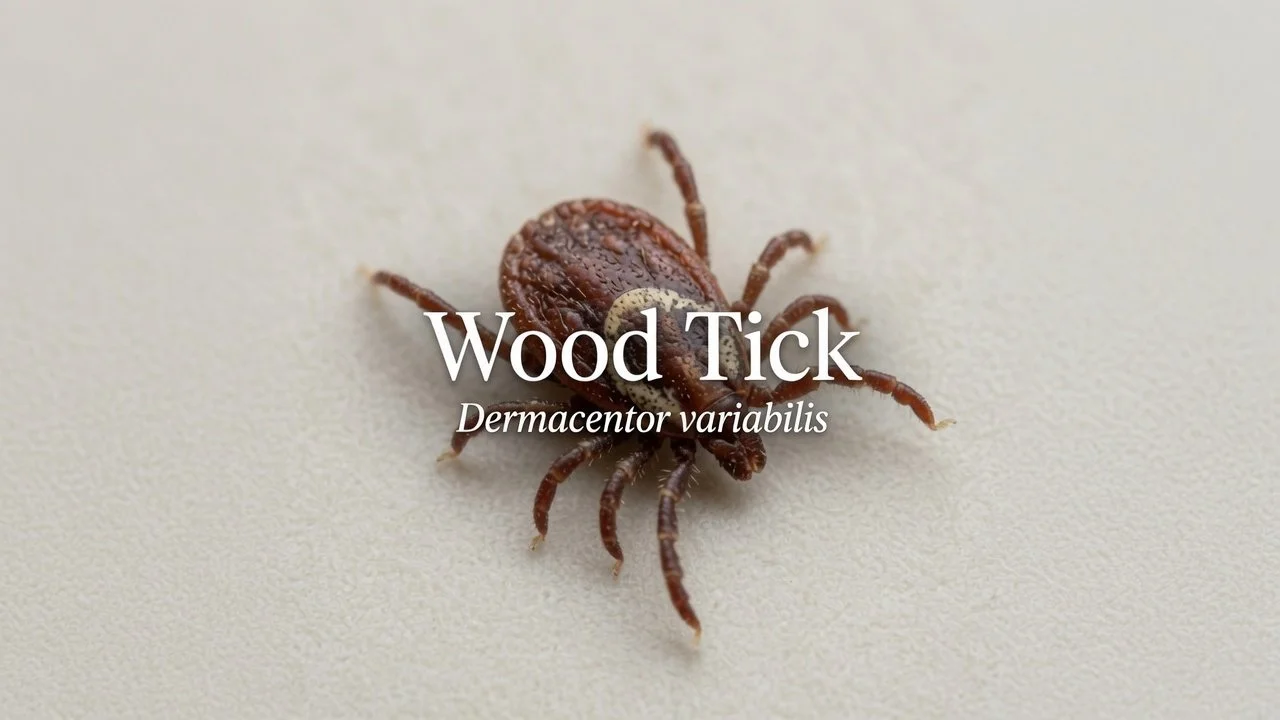
Quick Facts
-Size: Adults about 3/16 inch unfed; can swell significantly when engorged
-Color: Reddish-brown with white or silvery markings on the scutum
-Legs: 8
-Active Season in SE Wisconsin: Peak activity spring through mid-summer
-Main Concern: Can transmit Rocky Mountain spotted fever and tularemia (not the primary Lyme disease vector)
-Prefers: Dogs, livestock, and larger mammals; will bite people
Identification
Adult wood ticks are larger and more robust than deer ticks. They are reddish-brown with distinctive white or creamy markings on the shield (scutum). Females become much larger and grayish when fully engorged. Unlike deer ticks, they do not have long mouthparts that stay embedded as easily.
Biology & Life Cycle
Wood ticks have a life cycle that can take 1–3 years depending on conditions. They need a blood meal at each stage (larva, nymph, adult). Larvae and nymphs feed on small mammals; adults prefer larger hosts such as dogs, deer, and people. In southeastern Wisconsin they are most noticeable in spring and early summer.
Habitat
They are commonly found in grassy fields, along trails, in brushy areas, and at the edges of woods. In Racine County they often turn up on dogs after walks in parks, prairies, or overgrown lots. They climb vegetation and wait for a host to brush past.
Signs of Presence
Ticks found crawling on clothing or pets after outdoor activity
Attached, engorged ticks (especially on dogs around the head, neck, and ears)
Occasional sightings on people after time in grassy or brushy areas
Health Risks
Wood ticks can transmit Rocky Mountain spotted fever and tularemia. They are not the main carriers of Lyme disease in Wisconsin (that role belongs to the deer tick). Their bites can still cause local irritation and, in rare cases, tick paralysis.
Prevention
Keep grass mowed and reduce brushy edges near the home
Check pets thoroughly after outdoor time, especially around ears, neck, and between toes
Use veterinarian-approved tick preventatives on dogs
Wear protective clothing and use repellents when in tick habitat
Perform regular tick checks on people and clothing
Control
Perimeter treatments and vegetation management help reduce populations in yards. Focus on grassy and brushy borders rather than open lawn. Professional treatments timed for peak adult activity in spring can lower numbers significantly.
Local Notes – Racine & Southeastern Wisconsin
Wood ticks (American dog ticks) are common throughout Racine County, especially in open grassy areas, parks, and field edges. They are frequently brought into homes on dogs. While less associated with Lyme disease than deer ticks, they remain a regular nuisance and occasional health concern in the region.
When to Call a Professional
If you are repeatedly finding wood ticks on pets or people, or if your property has extensive grassy or brushy borders, a professional inspection and targeted treatment can help reduce the local population and lower the chance of bites.