
Paper Wasp (Polistes spp.)
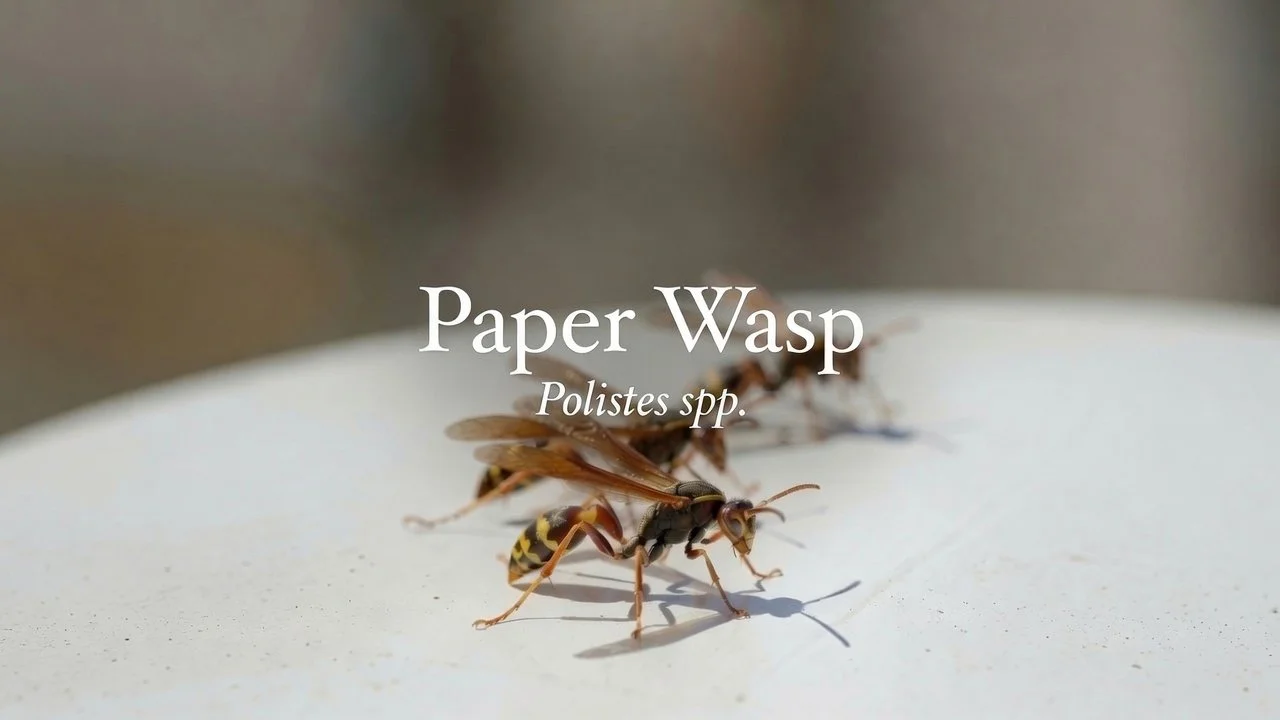
Quick Facts
Scientific name: Polistes spp.
Adult size: About ¾ to 1 inch
Color: Typically reddish-brown to dark brown with yellow markings
Nest: Open, umbrella-shaped paper nest with exposed cells
Temperament: Generally less aggressive than yellowjackets or bald-faced hornets when away from the nest
Identification
Paper wasps are slender wasps with long legs that often dangle in flight. They have a distinct “wasp waist” and are usually reddish-brown or dark with yellow markings. The body is more elongated than that of yellowjackets.
Their nests are the easiest way to identify them: an open, umbrella-shaped comb of hexagonal cells hanging from a single pedicle, with no outer paper envelope.
Biology & Life Cycle
Paper wasp colonies are annual. A fertilized queen (or small group of foundresses) starts a new nest in spring. Workers emerge and expand the nest through the summer. New queens and males are produced in late summer. The colony dies with hard freezes; only new queens overwinter in sheltered locations.
Nests are constructed from chewed wood fibers mixed with saliva, forming the familiar gray paper material.
Habits & Behavior
Paper wasps are semi-social. They build relatively small colonies (usually dozens of individuals rather than hundreds). Preferred nesting sites include eaves, soffits, porch ceilings, deck undersides, window frames, and other sheltered outdoor locations.
Adults feed on nectar and other sweets. They hunt caterpillars and other soft-bodied insects to feed the larvae, making them beneficial in gardens. They will defend the nest if it is disturbed but are generally less aggressive than yellowjackets or hornets when foraging away from the colony.
Signs of Infestation
Open umbrella-shaped paper nest under eaves, porches, or other sheltered surfaces
Wasps flying to and from a fixed location on a structure
Increasing activity around the nest in mid-to-late summer
Health & Property Risks
Paper wasps can sting multiple times and will defend their nest. Stings are painful and can cause allergic reactions in sensitive individuals. Nests near doorways, walkways, decks, or play areas create a safety concern. They do not cause structural damage.
Prevention Tips
Inspect eaves, soffits, and porch ceilings in spring and early summer for small developing nests
Seal gaps and potential nesting sites where practical
Reduce outdoor clutter that provides sheltered nesting spots
Keep outdoor trash covered and limit exposed sugary foods or drinks
Treatment Approach
Small, early-season nests in low-traffic areas can sometimes be left alone or carefully removed if the homeowner is comfortable doing so.
For nests in high-traffic locations or larger colonies:
Treat after dark when most wasps are on the nest
Use a labeled wasp and hornet aerosol that shoots a stream from a safe distance
Confirm the colony is inactive before removing the nest
Professional treatment is recommended for nests that are high, difficult to reach, or near areas with heavy human activity.
When to Call a Professional
Call if:
The nest is near a doorway, deck, play area, or other high-traffic location
Anyone in the household has a known sting allergy
The nest is large or difficult to reach safely
Multiple nests are present
Local Notes
Paper wasps are common across Racine County and southeastern Wisconsin from late spring through early fall. Nests are frequently found under eaves, porch ceilings, and deck structures. Colonies remain relatively small compared to yellowjackets or bald-faced hornets, and the wasps provide some natural control of caterpillars and other garden pests.