
Orb Weaver (Araneidae)
Quick Facts
Family: Araneidae (orb weavers)
Size: Females typically ¼ to over 1 inch in body length; males smaller
Appearance: Large rounded abdomen, often patterned; long legs that may be banded
Web: Classic wheel-shaped (orb) web
Role: Beneficial predators of flying insects
Identification
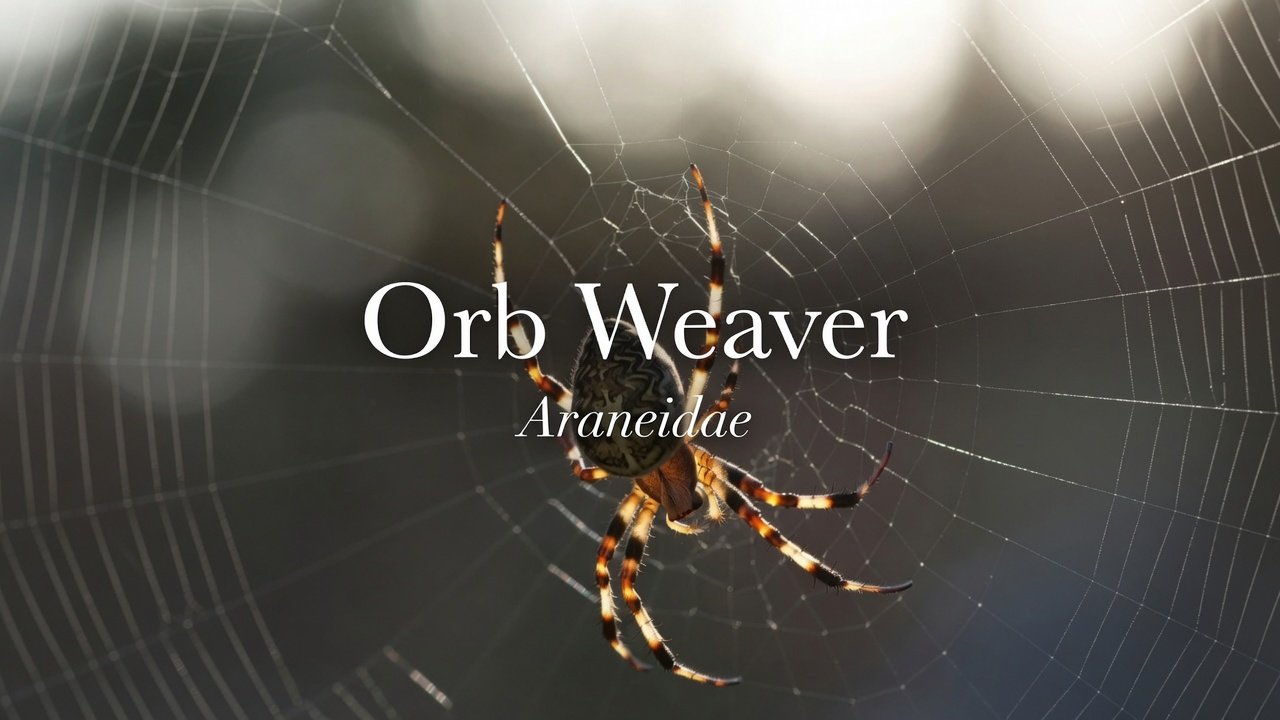
Orb weavers are the spiders that build the familiar circular, wheel-shaped webs. Females have a relatively large, rounded abdomen that is often patterned with spots, bands, or marbling. Legs are long and frequently banded. Colors vary widely by species — common ones in Wisconsin range from brown and gray to orange, yellow, or boldly patterned.
They are easily distinguished from other spiders by their distinctive orb webs and the large, “golf-ball” shaped abdomen of many females.
Biology & Life Cycle
Most orb weavers in Wisconsin have a one-year life cycle. Females build webs, catch prey, and produce egg sacs in late summer or fall. The eggs overwinter, and spiderlings emerge the following spring. Adults are most noticeable from mid-summer through fall when webs and spiders reach their largest size.
Males are smaller, wander more, and do not typically maintain large webs.
Habits & Behavior
Orb weavers are primarily sit-and-wait predators. They build a new or repaired web (often at night) and wait for flying insects to become entangled. Many species rebuild or eat and remake their webs regularly.
They are not aggressive toward people and will usually drop or retreat if disturbed. They prefer locations with good anchor points for the web — eaves, porches, fences, shrubs, tall grass, and areas near outdoor lights.
Signs of Activity
Large circular webs, especially noticeable with morning dew
Spider sitting in the center of the web or on a nearby retreat
Egg sacs (often round and attached to the web or nearby structure) in fall
Health & Property Risks
Orb weavers are not considered medically significant. Their bite is rare and usually causes only mild, temporary irritation if it occurs at all. They do not infest homes in the way some other spiders do, and they cause no structural damage.
Their main “impact” is the presence of webs, which some people find unsightly near doors, windows, or outdoor living areas.
Prevention Tips
Reduce outdoor lighting that attracts flying insects (and therefore spiders)
Keep vegetation trimmed away from the house
Regularly remove webs from high-traffic outdoor areas if desired
Seal obvious entry points if spiders are occasionally found indoors
Treatment Approach
Orb weavers are beneficial insects that help control mosquitoes, flies, and other flying pests. In most cases, no treatment is needed.
If webs are in undesirable locations:
Physically remove the web and the spider (gently relocating is preferred)
Focus on reducing insect attractants (lights, standing water, etc.) rather than broad insecticide applications
Chemical treatment is rarely necessary or recommended for these spiders.
When to Call a Professional
Call only if:
Large numbers of webs are creating a significant nuisance in outdoor living spaces
You need help distinguishing them from other spiders of concern
Egg sacs or webs are in locations that repeatedly cause problems
Local Notes
Orb weavers are very common across Racine County and southeastern Wisconsin from mid-summer into fall. Their large, dew-covered webs are a familiar sight on porches, in gardens, and along fence lines. They are generally viewed as beneficial and low-risk spiders that help keep flying insect populations in check.