
Norway Rat (Rattus norvegicus)
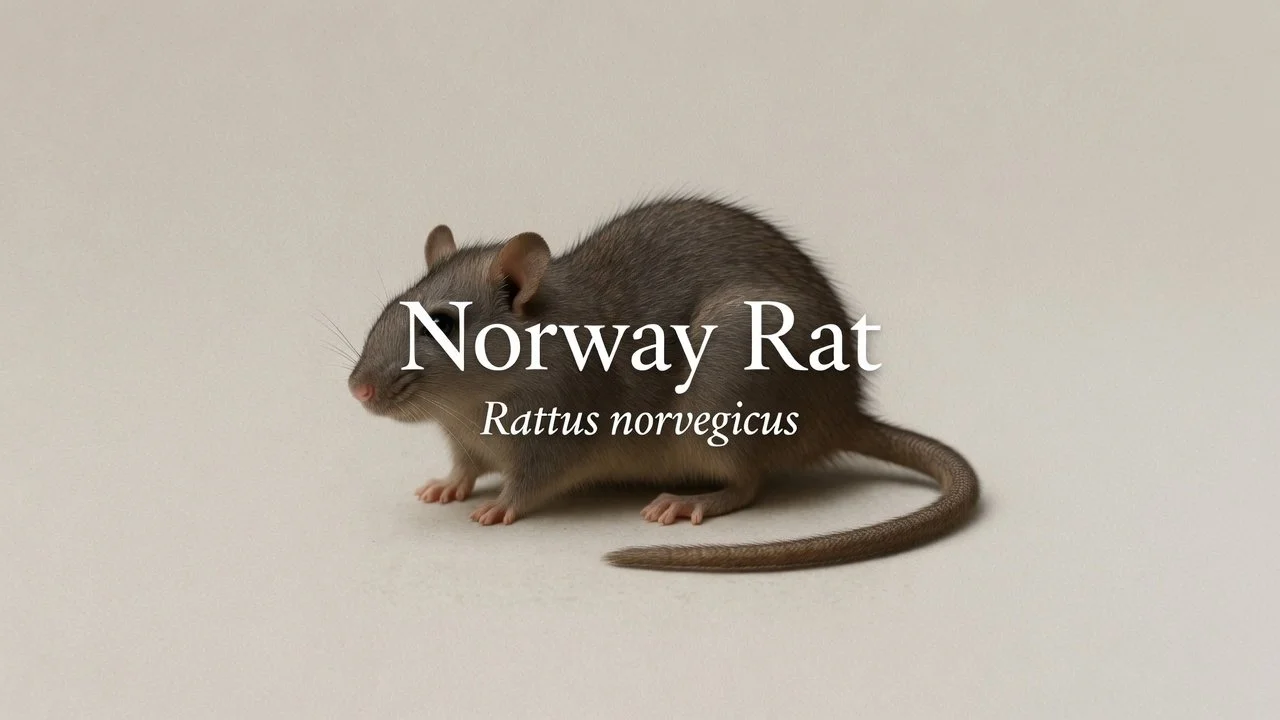
Quick Facts
Size: Adults 7–9.5 inches body length; tail shorter than body
Color: Coarse brownish-gray fur, lighter underside
Weight: Often 7–18 ounces
Droppings: Capsule-shaped, about ¾ inch long
Common Locations: Basements, crawl spaces, sewers, garages, under concrete slabs
Active: Primarily nocturnal
Identification
Norway rats are large, stocky rodents with a blunt nose, small ears, and a scaly tail that is shorter than the combined length of the head and body. Their fur is coarse and brownish-gray. They are noticeably heavier-bodied than roof rats or mice.
Biology & Life Cycle
Females can produce several litters per year, with 6–12 young per litter under favorable conditions. They reach maturity in about 2–3 months. Norway rats are strong burrowers and excellent climbers and swimmers. They prefer to nest at ground level or below.
Habitat
In Racine County and surrounding areas they are commonly associated with sewers, basements, crawl spaces, alleyways, and areas with available food and harborage (garbage, pet food, clutter). They often enter structures through gaps around pipes, foundation cracks, and doors.
Signs of Presence
Droppings (blunt, capsule-shaped)
Gnaw marks on wood, plastic, or food packaging
Grease marks along walls and baseboards
Burrows near foundations or under slabs
Scratching or scurrying sounds at night
Tracks or footprints in dusty areas
Health & Damage Concerns
Norway rats can contaminate food and surfaces with droppings and urine. They are capable of spreading various pathogens and can cause structural damage through gnawing. Their presence is often linked to sanitation or moisture issues.
Prevention
Seal gaps and holes larger than ½ inch around the foundation, pipes, and doors
Store food (including pet food) in sealed containers
Manage garbage and eliminate outdoor food sources
Reduce clutter in basements, garages, and storage areas
Address moisture problems and fix leaky pipes
When Professional Help Is Useful
Persistent activity, especially when droppings, burrows, or repeated sightings continue after basic sanitation and exclusion steps, usually indicates an established population that benefits from a structured inspection and treatment approach.
Local Notes – Racine County & Surrounding Areas
Norway rats are the most common large rat species encountered in Racine County, Kenosha, and nearby communities. They are frequently associated with older infrastructure, sewers, and properties with accessible food or harborage. Sightings often increase in fall as outdoor food sources decline.