
House Centipede (Scutigera coleoptrata)
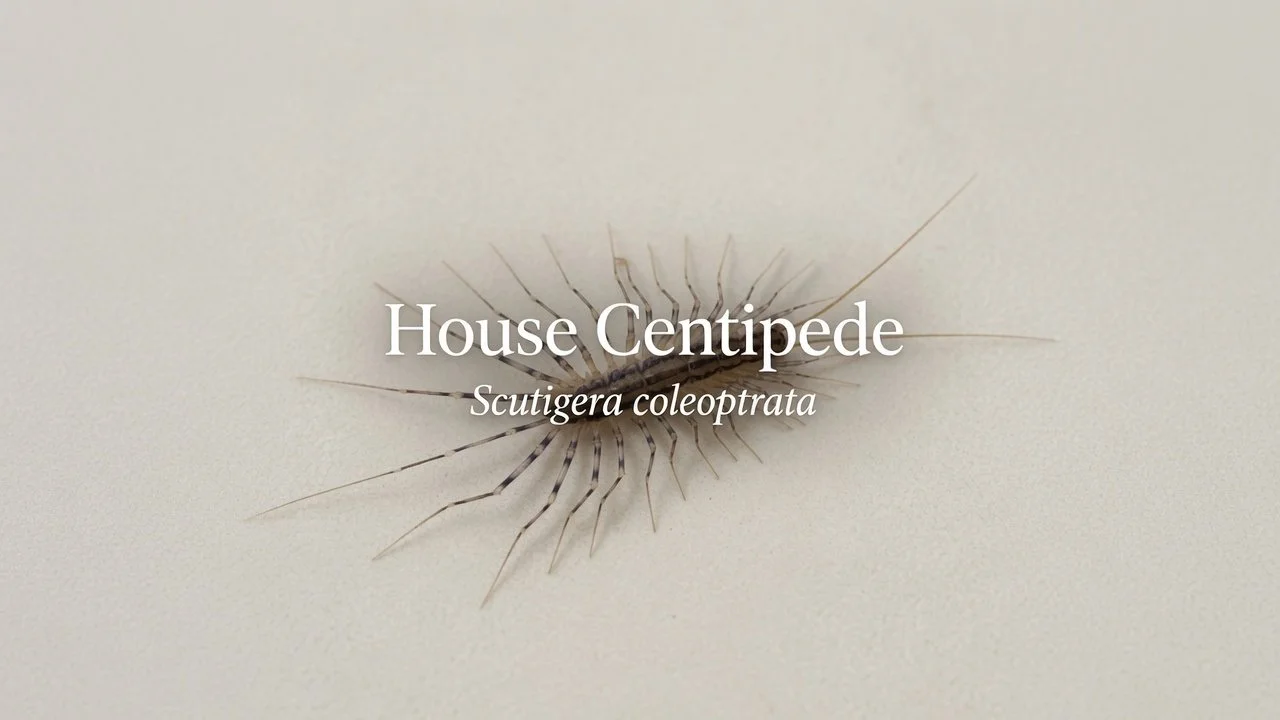
Quick Facts
Size: Body 1–1½ inches; leg span can appear much larger
Color: Yellowish to grayish with three dark stripes running lengthwise
Legs: 15 pairs of very long, banded legs
Speed: Extremely fast
Active: Nocturnal
Common Locations: Basements, bathrooms, crawl spaces, damp areas
Identification
House centipedes have a long, flattened body with many long legs that radiate outward, giving them a distinctive “hairy” or spidery appearance when running. Their legs and antennae are banded, and they move with remarkable speed. They are often seen darting across basement floors or walls.
Biology & Life Cycle
House centipedes are predators that feed on insects, spiders, and other small arthropods. They prefer damp environments and can live for one to several years. Females lay eggs in protected crevices. They are beneficial hunters but are frequently disliked because of their appearance and speed.
Habitat
In southeastern Wisconsin they are commonly found in basements, crawl spaces, bathrooms, and other moist areas of homes. They hide in cracks, under boxes, and in dark corners during the day and become active at night.
Signs of Presence
Fast-moving, long-legged centipedes seen on floors or walls
Occasional sightings in bathtubs, sinks, or near drains
Presence of other insects that serve as their prey
Health & Damage Concerns
House centipedes can bite if handled, but bites are uncommon and usually result only in mild, temporary discomfort. They do not damage structures or food and are generally considered beneficial because they prey on other pests.
Prevention
Reduce moisture in basements and crawl spaces
Seal cracks and gaps in foundations and around pipes
Reduce clutter that provides hiding places
Control other insects that serve as their food source
Use a dehumidifier in chronically damp areas
When Professional Help Is Useful
When house centipedes are seen regularly, it often indicates an underlying moisture issue or a population of other insects they are hunting. A professional inspection can help address both the centipedes and the conditions supporting them.
Local Notes – Southeastern Wisconsin
House centipedes are a familiar sight in basements across southeastern Wisconsin. They thrive in the damp conditions common in older homes and lower levels in the region. Despite their alarming speed and appearance, they are not aggressive toward people and pose little health risk.