
Honey Bee (Apis mellifera)
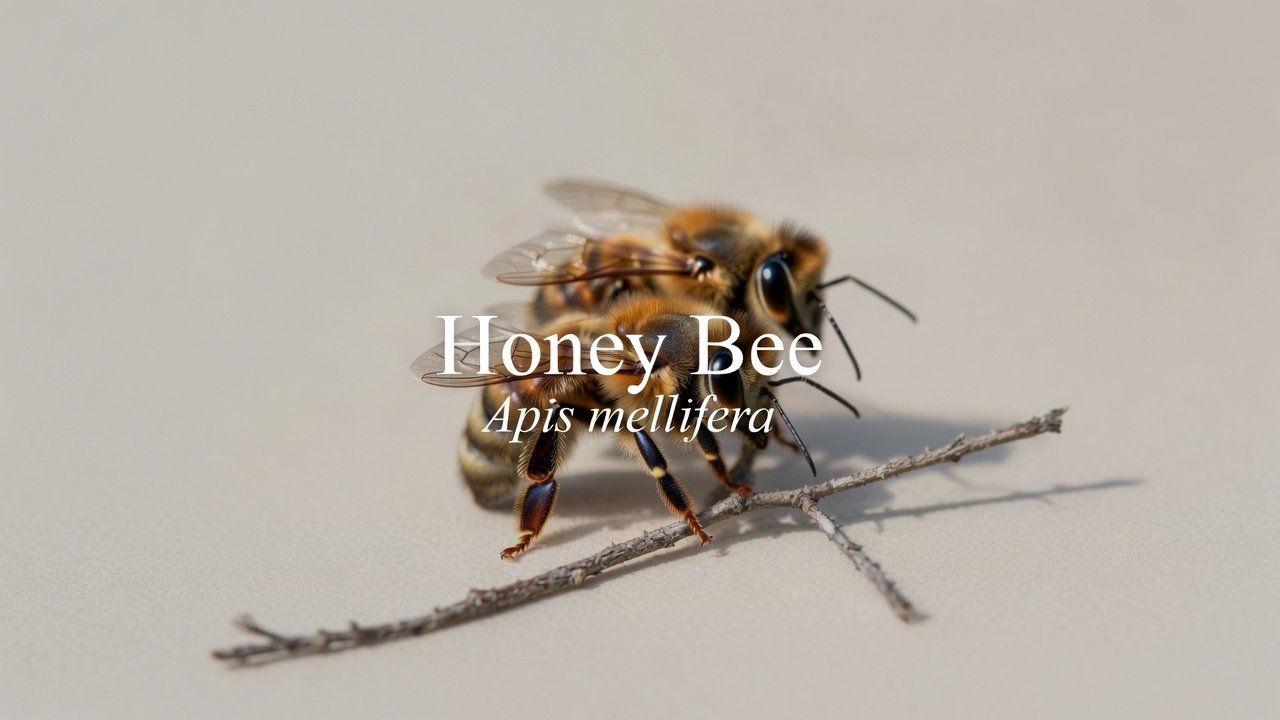
Quick Facts
Scientific name: Apis mellifera
Adult size: About ½ to ⅝ inch
Color: Golden-brown with black stripes, fuzzy thorax
Role: Important pollinator
Key point: Live removal and relocation is strongly preferred by professionals and community members over killing
Identification
Honey bees are medium-sized, fuzzy bees with a golden-brown body and darker bands on the abdomen. They have hairy eyes and carry pollen in baskets on their hind legs when foraging.
They are often confused with yellowjackets or other wasps, but honey bees are fuzzier, have a more robust body, and are generally less aggressive when away from the hive.
Biology & Life Cycle
Honey bees live in large perennial colonies with a single queen, thousands of workers, and seasonal drones. Colonies survive Wisconsin winters by clustering and consuming stored honey.
In spring and early summer, strong colonies often swarm — a natural form of reproduction where the old queen leaves with a portion of the workers to start a new colony. Swarms temporarily cluster on branches, fences, or structures while scout bees search for a permanent nesting site (often a hollow tree, wall void, or chimney).
Habits & Behavior
Honey bees forage for nectar and pollen and are generally non-aggressive when away from the colony. They will defend their hive if threatened.
Swarms are usually docile because the bees are focused on finding a new home and are gorged with honey. Established colonies in wall voids or other structures can become a concern if they grow large or if people or pets are frequently near the entrance.
Signs of Infestation / Activity
A temporary cluster of bees (swarm) on a branch, fence, or structure
Steady traffic of bees entering and exiting a specific hole in a wall, soffit, chimney, or tree
Visible comb or dripping honey in extreme cases
Health & Property Risks
Honey bees can sting, but they typically only do so in defense of the colony. A single sting is usually not dangerous unless the person is allergic.
Established colonies inside walls can lead to comb buildup, honey leakage, and secondary issues (wax moths, ants, or staining) if left for years. Swarms themselves are temporary and rarely a long-term problem.
Prevention Tips
Seal potential entry points into wall voids, chimneys, and attics
Keep tree cavities and other potential nesting sites monitored
Avoid leaving open sugary drinks or ripe fruit outdoors for extended periods
Treatment Approach
Live removal and relocation is the preferred approach whenever possible.
Swarms: Contact a local beekeeper. Most will remove a swarm at little or no cost because they value the bees.
Established colonies in structures: Professional removal that prioritizes saving the bees is recommended when feasible. This may involve cutting out comb and transferring the colony, or coordinating with a beekeeper experienced in structural removals.
Killing honey bees should be a last resort, used only when the colony location makes safe live removal impossible or when there is an immediate safety risk that cannot otherwise be managed.
When to Call a Professional
Call if:
A swarm has settled in a high-traffic area
Bees are entering and exiting a wall, soffit, or chimney
You need help locating a local beekeeper for live removal
An established colony is causing honey leakage or other structural concerns
Local Notes
Honey bee swarms are common in Racine County and southeastern Wisconsin from late April through June. Established colonies in homes are less frequent but do occur, especially in older structures with accessible voids. Local beekeepers are often willing to collect swarms, and responsible pest management prioritizes relocation over destruction whenever practical.