
Giant House Spider (Eratigena atrica)
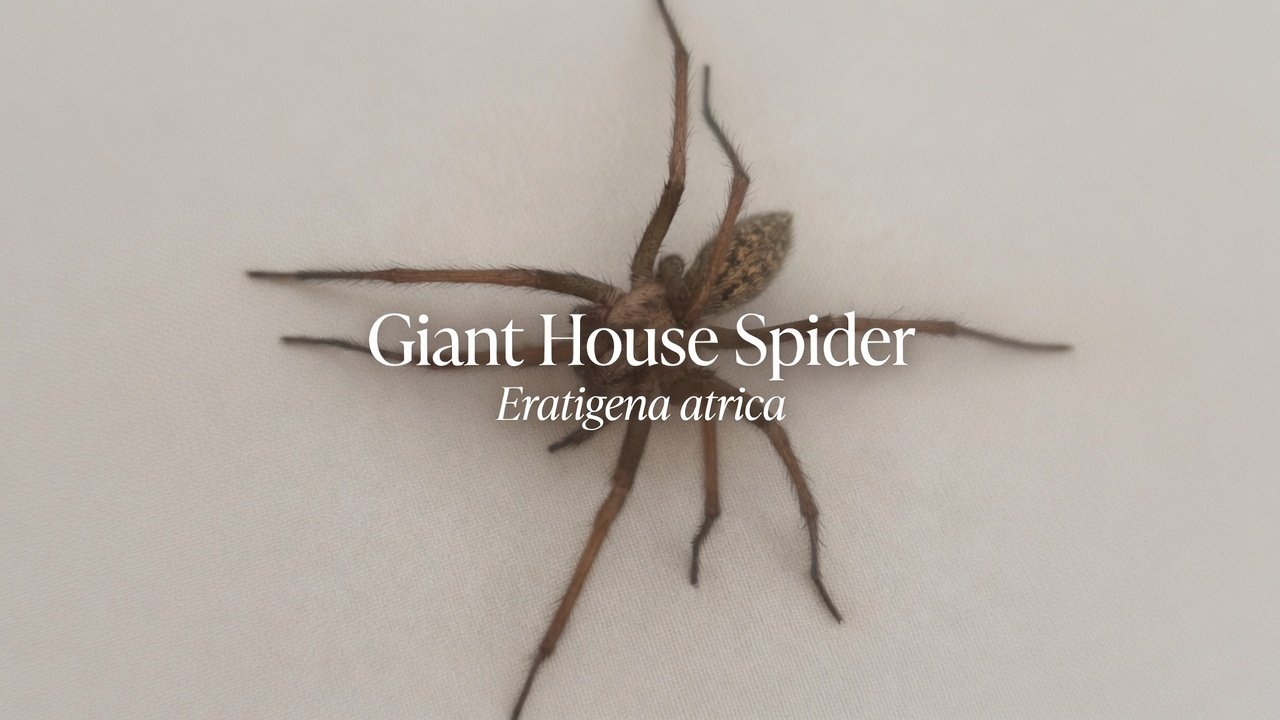
Quick Facts
Size: Body ½ to ¾ inch; leg span can reach 3–4 inches
Color: Brown to grayish-brown with darker markings
Web: Funnel-shaped webs in corners, basements, and garages
Active: Mostly nocturnal; fast-moving when disturbed
Bite: Rarely bites people; not considered dangerous
Common Locations: Basements, crawl spaces, garages, sheds
also known as: the Barn Funnel Weaver
Identification
Giant house spiders are large, long-legged spiders with a brownish body and distinct chevron-like markings on the abdomen. They have long, spindly legs and move very quickly. They are often mistaken for wolf spiders or “dangerous” spiders because of their size and speed.
Biology & Life Cycle
These spiders build funnel-shaped webs and wait near the entrance for prey. Females can live for several years. They are most noticeable in late summer and fall when males wander in search of mates. They feed primarily on insects and other small arthropods.
Habitat
In southeastern Wisconsin they are commonly found in basements, crawl spaces, garages, sheds, and other cool, undisturbed areas. They prefer corners, floor-wall junctions, and cluttered spaces where they can anchor their funnel webs.
Signs of Presence
Funnel-shaped webs in corners or along baseboards
Fast-moving large brown spiders seen at night or when disturbed
Occasional sightings of males wandering across floors in fall
Health & Damage Concerns
Giant house spiders are not considered medically significant. They rarely bite, and when they do the effects are typically mild. Their main impact is as a nuisance due to their size, speed, and the webs they leave behind.
Prevention
Reduce clutter in basements, garages, and storage areas
Vacuum webs and egg sacs regularly
Seal gaps and cracks around foundations, windows, and doors
Reduce moisture and insect prey that attract them
Use yellow “bug lights” outdoors to draw fewer flying insects near the house
When Professional Help Is Useful
When large numbers of funnel webs keep reappearing or spiders are regularly seen wandering indoors, a professional inspection can help identify contributing moisture or insect issues and reduce the population more effectively than occasional vacuuming.
Local Notes – Southeastern Wisconsin
Giant house spiders are one of the larger spiders regularly encountered in basements and garages across southeastern Wisconsin. They are especially noticeable in older homes and outbuildings. Despite their intimidating size and speed, they are not aggressive toward people and pose little health risk.