
German Cockroach (Blattella germanica)
Quick Facts
Scientific name: Blattella germanica
Adult size: About ½ to ⅝ inch
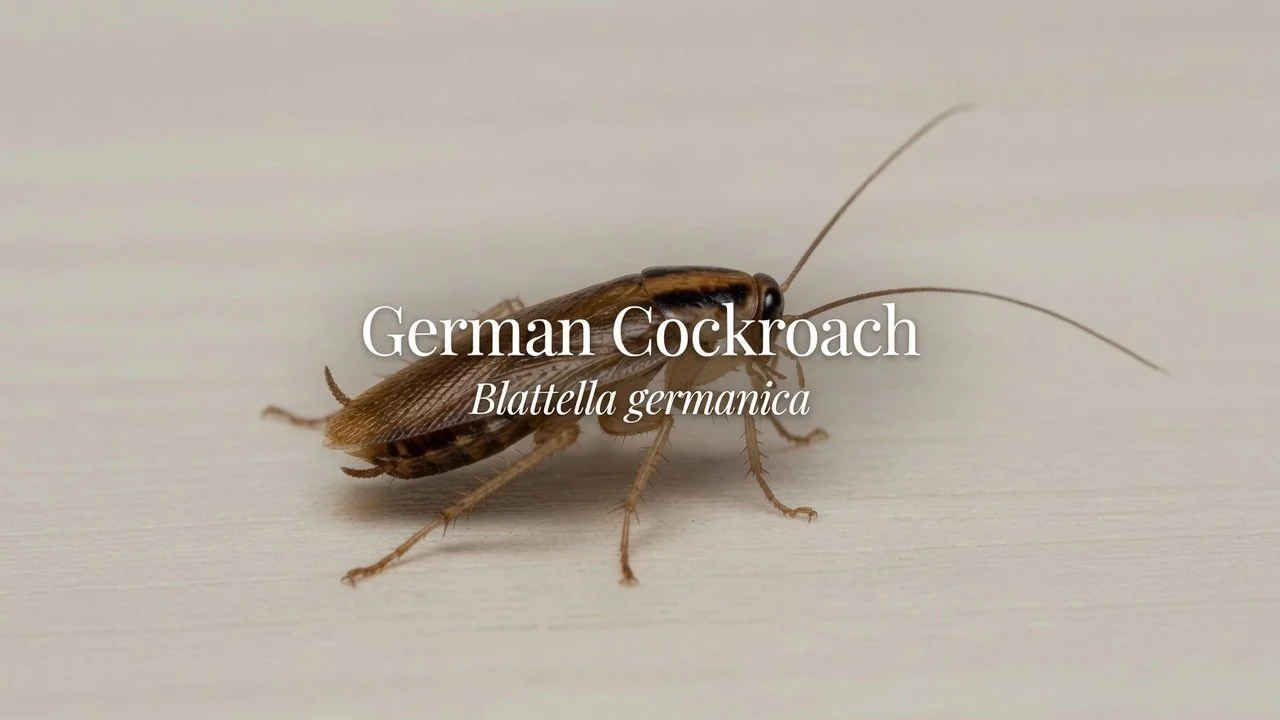
Color: Light brown to tan with two dark parallel stripes on the pronotum (behind the head)
Most common indoor cockroach in Racine and southeastern Wisconsin
Identification
Adults are small, light brown to tan, with two distinctive dark longitudinal stripes running down the pronotum. They have fully developed wings but rarely fly. Nymphs are darker with a light stripe down the back.
This is the species most often found in kitchens, bathrooms, and food-handling areas. It is frequently confused with the brown-banded cockroach, which has horizontal bands across the body instead of the two dark stripes behind the head.
Biology & Life Cycle
German cockroaches are the fastest-breeding common cockroach. Females carry an egg case (ootheca) containing 30–40 eggs until just before hatching. A single female can produce several egg cases in her lifetime. Under good conditions, development from egg to adult takes about 1.5–4 months, and populations can grow very quickly.
They prefer warm, humid environments and are almost exclusively indoor pests.
Habits & Behavior
These cockroaches are nocturnal and spend the day hiding in cracks and crevices near food and water — under sinks, behind appliances, in cabinet hinges, wall voids, and around plumbing. They move readily between rooms and units in multi-family buildings through shared walls and utility lines.
They do not typically live outdoors in Wisconsin’s climate.
Signs of Infestation
Live cockroaches (especially at night or when lights are turned on)
Small dark droppings that look like coffee grounds or black pepper
Empty egg cases
Shed skins
A musty odor in heavier infestations
Smear marks along edges and in corners
Seeing them during the day usually means the population is already significant.
Health & Property Risks
German cockroaches can contaminate food and surfaces and are known to trigger allergies and asthma, especially in children. They spread bacteria through their droppings, bodies, and the paths they travel. In apartments and multi-unit housing common in Racine County, infestations can move between units if not addressed thoroughly.
Prevention Tips
Store food in sealed containers
Clean up crumbs, grease, and spills promptly
Fix plumbing leaks and reduce moisture
Seal cracks and gaps around pipes, baseboards, and cabinets
Reduce clutter in kitchens and bathrooms
Inspect grocery bags, used appliances, and second-hand items before bringing them inside
Treatment Approach
Professional treatment is usually required for established infestations because of their rapid reproduction and tendency to hide deep in cracks. Effective programs typically include:
Thorough inspection to locate harborages
Gel baits placed in cracks, crevices, and high-activity areas
Insect growth regulators (IGRs) to prevent nymphs from reaching adulthood
Dusts in voids
Follow-up visits to monitor and adjust treatment
Sanitation and exclusion support the chemical work. DIY sprays often scatter the population and make control harder.
When to Call a Professional
Call if you:
See cockroaches regularly, especially during the day
Find droppings or egg cases in multiple areas
Live in a multi-unit building
Have tried basic cleaning and baits without lasting results
Early professional treatment is far more effective (and less expensive) than waiting until the population explodes.
Local Notes
The German cockroach is the dominant indoor cockroach species across Racine County and southeastern Wisconsin. It thrives in apartments, older homes, restaurants, and any structure with consistent warmth, food, and moisture. Infestations are year-round indoors.