
Earwig (Forficula auricularia)
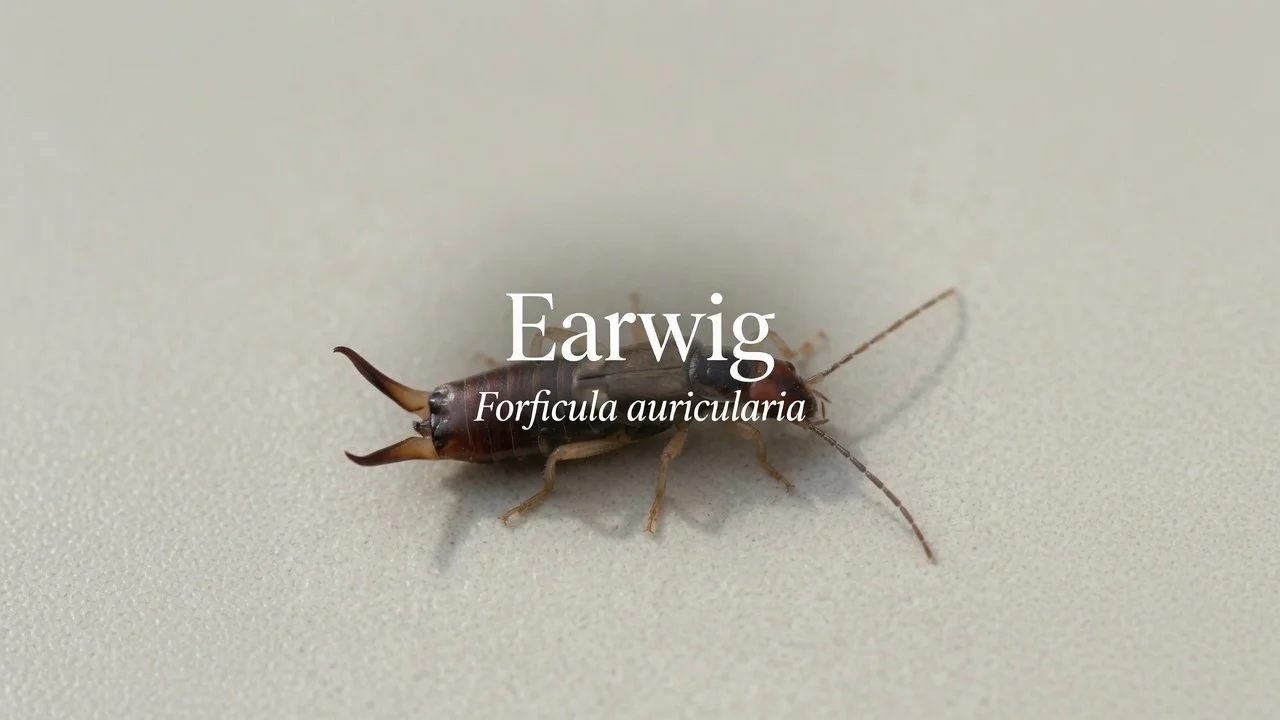
Quick Facts
Size: About ½ to ¾ inch long
Color: Dark reddish-brown to blackish with lighter legs
Distinctive Feature: Forceps-like pincers (cerci) at the end of the abdomen
Active: Primarily nocturnal
Common Locations: Basements, crawl spaces, under objects outdoors, mulch, and debris
Identification
Earwigs are elongated insects with short, leathery front wings and a pair of prominent forceps (pincers) at the rear. The forceps are usually curved in males and straighter in females. They have long antennae and six legs. Despite the myth, they do not crawl into human ears.
Biology & Life Cycle
European earwigs are the most common species found in homes. Females care for their eggs and young nymphs. They feed on a wide range of plant material, decaying organic matter, and occasionally other small insects. They are most active at night and hide in tight, moist spaces during the day.
Habitat
In southeastern Wisconsin they are frequently found in basements, crawl spaces, under flowerpots, in mulch, under boards, and in other damp, sheltered locations. They often enter homes in search of moisture or hiding places, especially in spring and fall.
Signs of Presence
Live earwigs found in basements, bathrooms, or near entry points
Insects hiding under objects, in cracks, or in damp clutter
Occasional damage to soft plant tissue or flowers outdoors
Health & Damage Concerns
Earwigs are harmless to people. Their pincers are used for defense and mating displays and are not capable of harming humans in any meaningful way. They do not transmit disease. Outdoors they can occasionally nibble on plants, but indoors they are primarily a nuisance.
Prevention
Reduce moisture in basements and crawl spaces
Keep mulch and debris pulled away from the foundation
Seal gaps around doors, windows, and foundation cracks
Remove clutter and hiding places near the home
Use a dehumidifier in chronically damp areas
When Professional Help Is Useful
When earwigs are repeatedly found indoors in noticeable numbers, a professional can help identify moisture sources and entry points that are allowing them to move inside.
Local Notes – Southeastern Wisconsin
European earwigs are well-established across southeastern Wisconsin. They are a common seasonal nuisance in basements and around foundations, particularly during periods of wet weather or when outdoor conditions push them to seek shelter indoors.