
Drain Fly (Psychodidae)
Quick Facts
Family: Psychodidae (also called moth flies or sewer flies)
Adult size: About 1/16 to 1/4 inch
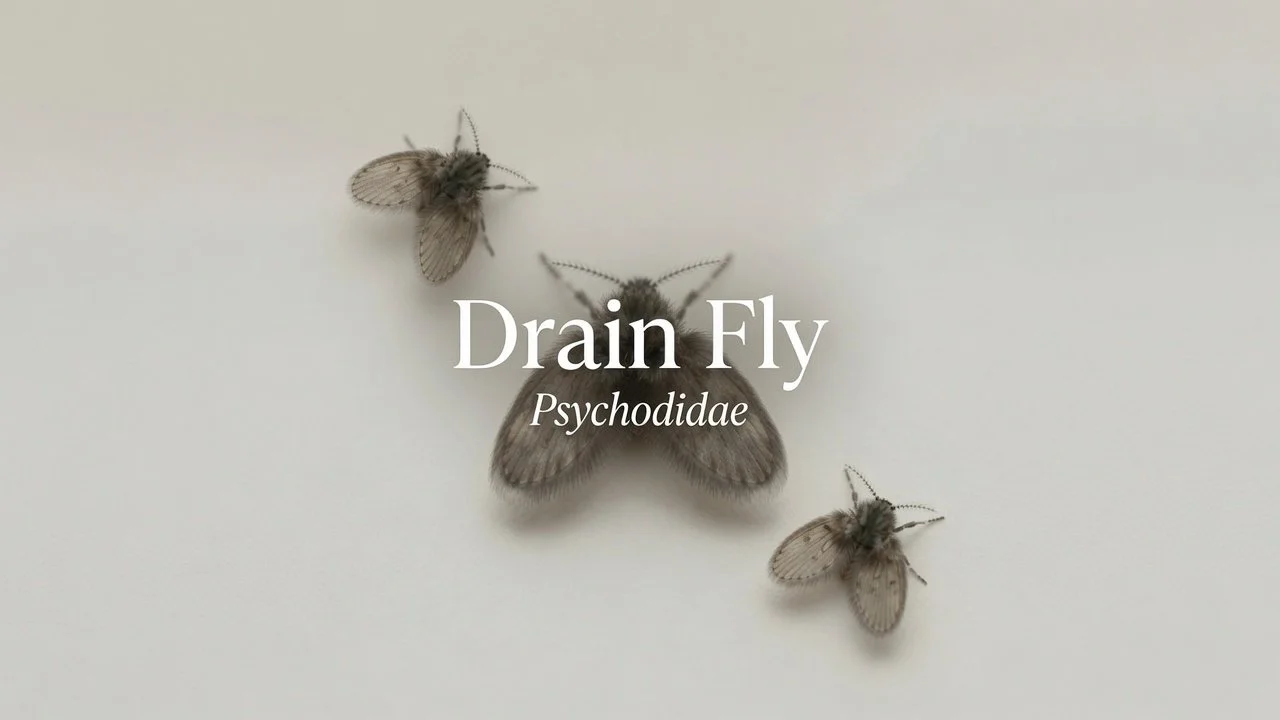
Appearance: Fuzzy, moth-like with densely hairy wings
Breeding sites: Gelatinous organic film inside drains and moist organic buildup
Do they bite?: No
Identification
Drain flies are small, fuzzy insects that look more like tiny moths than typical flies. Their wings and bodies are covered with fine hairs, and they hold their wings roof-like over the body when at rest. They are weak fliers and often hop or crawl short distances. Color ranges from light gray to brownish or black.
They are easily distinguished from fruit flies (which are smooth-bodied with red eyes) and from larger house flies.
Biology & Life Cycle
Females lay eggs on the surface of the slimy organic film that builds up inside drains, pipes, and other moist organic material. Larvae are worm-like and feed in this film. The full life cycle can be completed in about 1–3 weeks depending on temperature and conditions. Adults live about 2 weeks and are most active in the evening.
Habits & Behavior
Drain flies are commonly found resting on walls and ceilings near sinks, showers, floor drains, and utility rooms during the day. They become more active at night and are weakly attracted to lights. They do not fly strongly and usually stay close to their breeding site.
Signs of Infestation
Small fuzzy flies resting on bathroom or kitchen walls near drains
Flies emerging from sinks, showers, or floor drains
Persistent presence even after general cleaning
Health & Property Risks
Drain flies do not bite and are primarily a nuisance. Large numbers can indicate a significant buildup of organic material in the plumbing, which is a hygiene concern. In rare cases they have been associated with respiratory irritation in sensitive individuals when present in high numbers.
Prevention Tips
Regularly clean sink, shower, and floor drains to remove the organic film
Use a stiff brush and enzymatic drain cleaners designed to break down organic buildup
Keep drains free of hair, food particles, and grease
Fix any slow-draining or leaking pipes that create persistent moisture
Avoid pouring grease or large amounts of food waste down drains
Treatment Approach
The only lasting solution is eliminating the breeding source:
Thoroughly clean the drain pipes and remove the gelatinous film where larvae develop
Enzymatic or microbial drain treatments are more effective than bleach or boiling water alone
Once the film is removed, remaining adults will die off within a week or two
Sticky traps can help reduce adult numbers while the source is being cleaned
Pouring bleach or boiling water provides only temporary relief and does not remove the organic film that the larvae need.
When to Call a Professional
Call if:
Flies continue to appear after thorough drain cleaning
Multiple drains are involved or the source is difficult to access
You suspect a problem deeper in the plumbing or sewer line
The infestation is large or recurring
Local Notes
Drain flies are a common indoor nuisance in Racine County and southeastern Wisconsin, especially in older homes or buildings with slower drains and more organic buildup. They are most noticeable in bathrooms and kitchens during warmer months but can occur year-round indoors. Consistent drain maintenance is the most effective long-term control.