
Deer Tick (Ixodes scapularis)
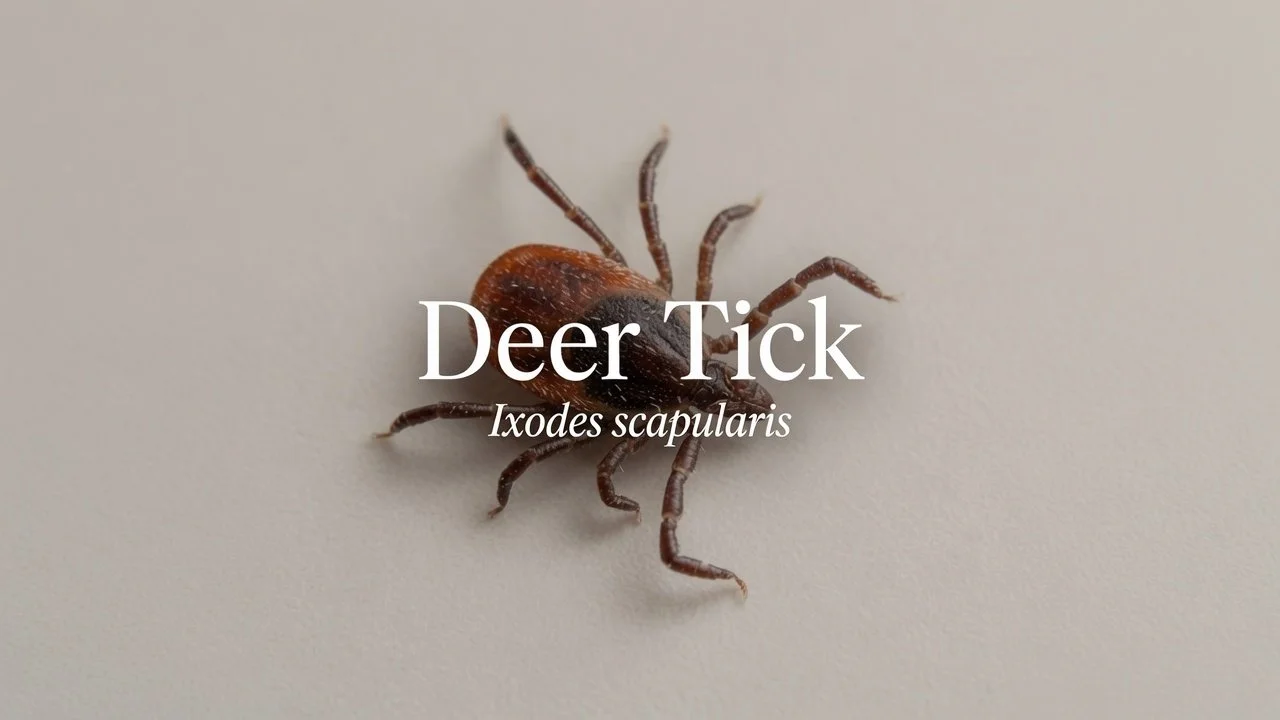
Quick Facts
Size: Adults ~1/8 inch (unfed); nymphs about the size of a poppy seed
Color: Dark brown/black scutum with reddish body (females); males entirely dark
Legs: 8 (adults and nymphs)
Active Season in SE Wisconsin: Nymphs May–July; adults fall and early spring
Main Concern: Lyme disease and other tick-borne illnesses
Does not jump or fly — waits on vegetation and latches on
Identification
Adult females are small (about the size of a sesame seed when unfed) with a dark brown to black scutum (shield) and a reddish-brown body. Males are smaller and entirely dark. Nymphs are roughly the size of a poppy seed and are the stage most likely to bite people. All stages have eight legs as adults/nymphs; larvae have six.
Biology & Life Cycle
Deer ticks have a two-year life cycle with four stages: egg, larva, nymph, and adult. They require a blood meal at each active stage. Larvae and nymphs commonly feed on small mammals and birds; adults prefer white-tailed deer. In southeastern Wisconsin, nymphs are most active from May through July, and adults are active in fall and early spring.
Habitat
They thrive in wooded areas, brushy edges, tall grass, and leaf litter. In Racine County they are frequently found along trail edges, in backyard woodlines, and in overgrown lots. They do not jump or fly — they quest from vegetation and latch onto passing hosts.
Signs of Presence
Ticks found on clothing, pets, or skin after time outdoors
Engorged ticks attached to people or animals
In some cases, the classic “bull’s-eye” rash (erythema migrans) that can appear days to weeks after a bite
Health Risks
Deer ticks are the primary vector of Lyme disease in Wisconsin. They can also transmit anaplasmosis, babesiosis, and Powassan virus. Nymphs pose the greatest risk because they are tiny and often go unnoticed.
Prevention
Keep grass short and remove leaf litter near the home
Create a wood-chip or gravel barrier between lawns and wooded areas
Wear light-colored clothing and tuck pants into socks when in tick habitat
Use EPA-registered repellents (DEET, picaridin, or permethrin-treated clothing)
Do thorough tick checks on people and pets after outdoor activity
Shower within two hours of coming indoors
Control
Yard treatments can reduce tick populations when applied to shaded, leaf-littered, and perimeter areas. Focus on the edges of the property rather than open lawn. Professional treatments timed for nymphal and adult activity periods are more effective than one-time DIY applications.
Local Notes – Racine & Southeastern Wisconsin
Deer ticks are well-established throughout Racine County and the rest of southeastern Wisconsin. Lyme disease cases are reported every year in the region. Peak nymph activity typically runs from late May into July, which is when most human exposures occur. Properties bordering woods, prairies, or overgrown areas carry higher risk.
When to Call a Professional
If you are finding ticks regularly on pets or people, or if your property has heavy wooded/brushy edges, a professional inspection and targeted treatment plan can significantly reduce the population and lower the risk of tick-borne illness.