
Cellar Spider (Pholcus phalangioides)
Identification
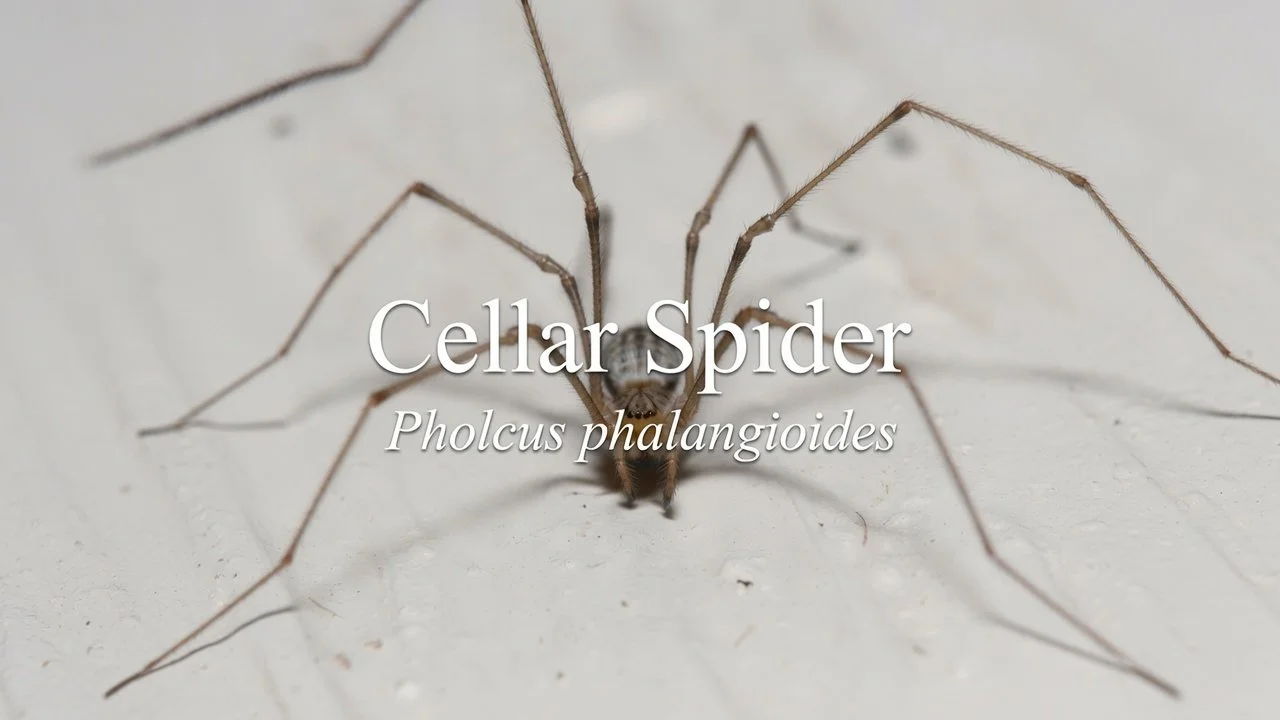
Cellar spiders have very small bodies and extremely long, thin legs. They are often mistaken for harvestmen (“daddy long-legs”), but true cellar spiders build webs and have a more segmented body. When disturbed, they may bounce rapidly in their web.
Biology & Life Cycle
These spiders live almost exclusively indoors in protected environments. Females wrap their eggs in a loose silk sac and carry them in their jaws. They feed on other insects and spiders, including some larger household spiders. Populations can build up in undisturbed areas.
Habitat
In southeastern Wisconsin they are extremely common in basements, crawl spaces, garages, and other damp or dark areas of homes. They prefer corners where walls meet ceilings and quiet, low-traffic spaces.
Signs of Presence
Messy, irregular cobwebs in corners and along ceiling lines
Spiders hanging upside down in their webs
Occasional sightings of long-legged spiders on walls or ceilings
Health & Damage Concerns
Cellar spiders are harmless to people. They do not present a medical risk and are generally considered beneficial because they prey on other insects and spiders. Their main impact is the accumulation of unsightly webs.
Prevention
Regularly vacuum or remove cobwebs
Reduce clutter in basements and storage areas
Lower humidity where possible
Seal cracks and gaps that allow other insects (their prey) to enter
Improve air circulation in damp spaces
When Professional Help Is Useful
When cobwebs continually reappear despite regular cleaning, or when large numbers of cellar spiders are present, a professional can help address the underlying insect activity and moisture conditions that support them.
Local Notes – Southeastern Wisconsin
Cellar spiders are among the most common spiders found in homes throughout southeastern Wisconsin. They thrive in the cool, damp conditions typical of basements and crawl spaces in the region and are present year-round in many structures.
Quick Facts
Size: Body about ¼ inch; legs up to 2–3 inches long
Color: Pale yellow to light gray or tan
Web: Loose, irregular cobwebs in corners and ceilings
Active: Year-round indoors
Bite: Harmless to humans
Common Locations: Basements, crawl spaces, garages, closets, ceilings