
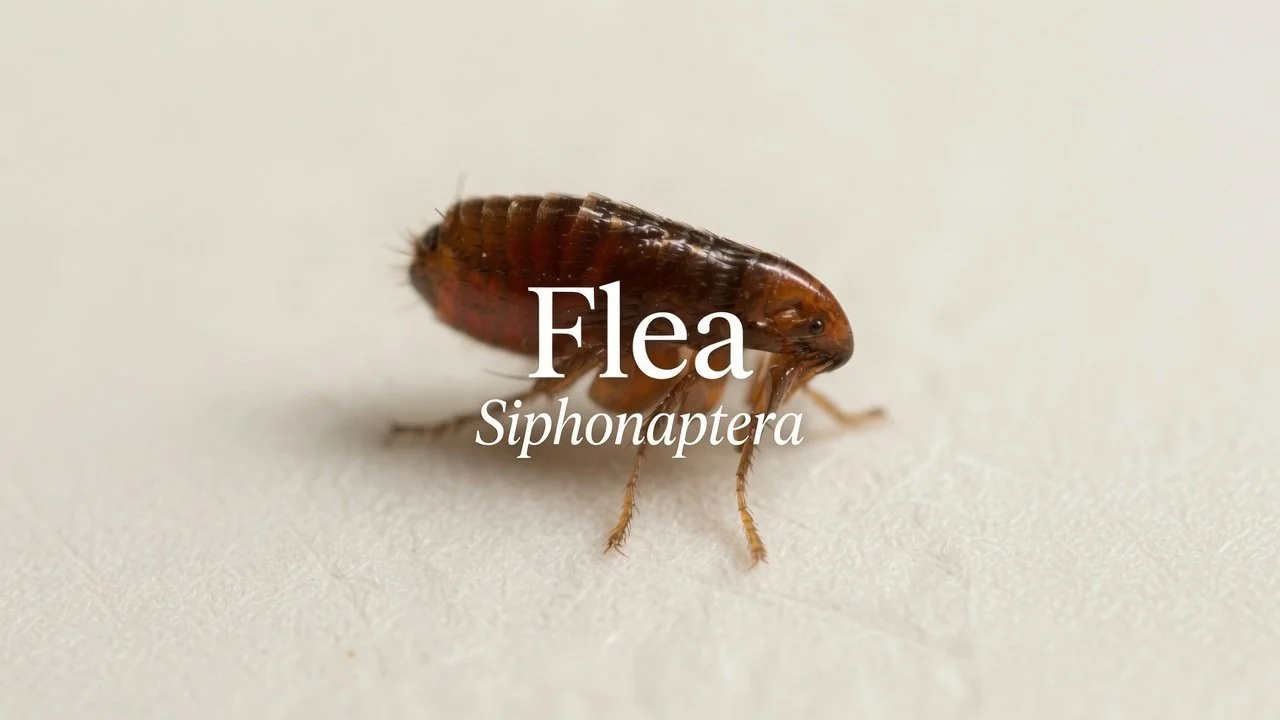
Flea (Siphonaptera)
Quick Facts
Family: Psychodidae (also called moth flies or sewer flies)
Adult size: About 1/16 to 1/4 inch
Appearance: Fuzzy, moth-like with densely hairy wings
Breeding sites: Gelatinous organic film inside drains and moist organic buildup
Do they bite?: No
Identification
Adult fleas are small, dark reddish-brown to black insects with a hard, shiny body that is flattened from side to side. They are wingless and have long, strong hind legs adapted for jumping. Their bodies are covered with backward-facing spines that help them move through fur.
Flea dirt (dried blood feces) often appears as small black specks on pets or bedding and turns reddish when moistened.
Biology & Life Cycle
Fleas undergo complete metamorphosis: egg, larva, pupa, and adult.
Adult females lay eggs on the host; the eggs fall off into carpets, furniture, pet bedding, and cracks in floors.
Larvae are worm-like and feed on flea dirt and organic debris.
Pupae develop inside a protective cocoon and can remain dormant for weeks to months until stimulated by warmth, vibration, or carbon dioxide.
The full cycle can be completed in as little as 2–3 weeks under favorable conditions, but pupae can delay emergence for much longer.
Habits & Behavior
Adult fleas spend most of their time on the host, feeding on blood. They jump onto new hosts when opportunities arise. Indoors, the majority of the population is usually in the environment (eggs, larvae, and pupae in carpets and furniture) rather than on the animal. Fleas prefer warm, humid conditions.
Signs of Infestation
Pets scratching, biting, or grooming excessively
Small dark insects jumping on pets, bedding, or flooring
Black “pepper-like” flea dirt on pets or in bedding
Red, itchy bite marks on people (often around ankles and lower legs)
Increased activity after vacuuming or when a home has been vacant
Health & Property Risks
Flea bites cause itching and irritation in both pets and people. Heavy infestations can lead to anemia in young or small animals. Fleas can transmit tapeworms to pets and, in rare cases, other pathogens. Scratching can lead to secondary skin infections.
Prevention Tips
Keep pets on a year-round veterinarian-recommended flea preventive
Vacuum carpets, furniture, and pet areas regularly (dispose of the vacuum bag or empty the canister outside)
Wash pet bedding frequently in hot water
Treat the environment if an infestation is present — focusing only on the pet is usually not enough
Reduce wildlife access around the home (raccoons, opossums, etc. can carry fleas)
Treatment Approach
Effective flea control requires treating both the pets and the environment:
Use a quality on-animal treatment recommended by a veterinarian
Thoroughly vacuum and clean all areas where pets spend time
Apply an insect growth regulator (IGR) and adulticide to carpets and furniture if needed
Be prepared for a lag period — pupae can continue to emerge for several weeks after treatment begins
Professional treatment is often helpful for established indoor infestations.
When to Call a Professional
Call if:
Fleas persist after treating pets and cleaning the home
The infestation is heavy or widespread
Multiple pets or a large home are involved
You need help breaking the life cycle in the environment
Local Notes
Fleas are a common seasonal problem in Racine County and southeastern Wisconsin, especially from late spring through fall. They frequently enter homes on pets or are carried in by wildlife. Consistent use of pet preventives and good environmental hygiene are the most effective long-term strategies.