
Brown Marmorated Stink Bugs (Halyomorpha halys)
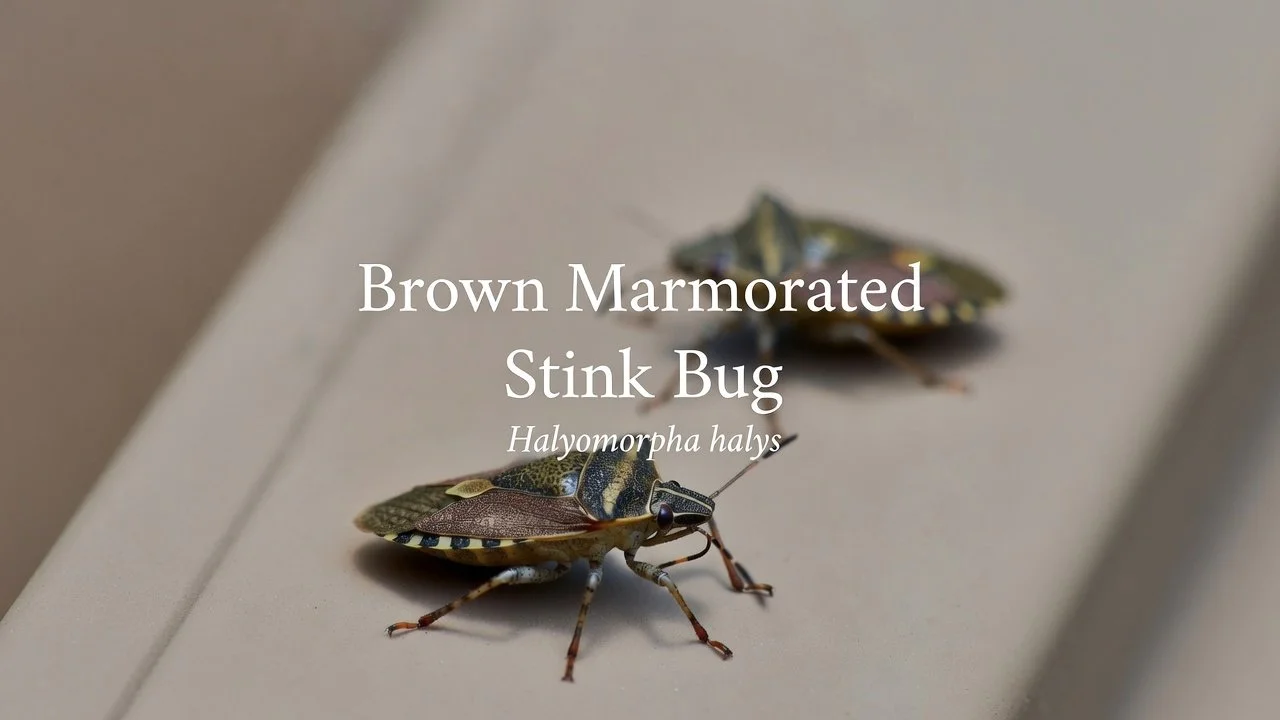
Quick Facts
Quick Facts
Scientific name: Halyomorpha halys
Adult size: About ½ to ⅝ inch
Color: Mottled brown/gray shield-shaped body
Key ID features: Alternating light and dark bands on the antennae and on the edge of the abdomen
Status: Invasive species established in Wisconsin
Identification
Adults have the classic shield-shaped body of stink bugs and are mottled brown to gray. The most reliable field marks are the alternating light (whitish) and dark bands on the antennae and the alternating light and dark markings along the exposed edge of the abdomen. Eyes are dark reddish.
Native look-alikes (such as some Euschistus species) lack the clear banding on the antennae and abdomen edge and often have more pointed shoulders.
Biology & Life Cycle
In Wisconsin this species typically has one generation per year (sometimes a partial second generation in warmer years). Adults overwinter in protected places — often inside homes, attics, wall voids, and other structures. They become active in spring, mate, and begin laying eggs on host plants.
Eggs are laid in clusters on the undersides of leaves. Nymphs go through five instars before becoming adults. By late summer and early fall, adults begin seeking overwintering sites and start congregating on and entering buildings.
Habits & Behavior
Brown marmorated stink bugs feed on a wide range of plants (over 200 species), including fruit trees, vegetables, ornamentals, and many landscape plants. They use piercing-sucking mouthparts to feed on plant juices.
In fall they are strongly attracted to buildings as overwintering sites. Large numbers can gather on sunny exterior walls and then move indoors through small gaps around windows, doors, vents, and siding. Once inside they are mostly a nuisance — they do not reproduce indoors or cause structural damage, but they can emit a strong odor when disturbed or crushed.
Signs of Infestation
Adults clustered on exterior walls (especially south- and west-facing) in fall
Bugs found indoors on windows, walls, or ceilings during fall and winter
Distinctive odor when the insects are crushed or threatened
Feeding damage on fruits and vegetables outdoors (puckered or discolored spots, especially on apples, tomatoes, peppers, etc.)
Health & Property Risks
These stink bugs do not bite or sting people and do not transmit diseases. The main issues are:
Nuisance when large numbers enter homes in fall
Strong odor if crushed or handled
Potential agricultural and garden damage to fruits and vegetables
They are considered a significant agricultural pest in some states, though damage levels in Wisconsin have generally been lower so far.
Prevention Tips
Seal cracks and gaps around windows, doors, utility penetrations, and siding before fall
Install or repair window and door screens
Screen attic and soffit vents
Reduce exterior lighting that attracts them at night
In the garden, monitor plants and remove egg masses or nymphs by hand when practical
Treatment Approach
Indoors: Vacuuming is the preferred method. Avoid crushing them if possible because of the odor. Do not use indoor foggers or broad sprays — they are unnecessary and can make the odor worse.
Outdoors / Structures: Focus on exclusion (sealing entry points). Residual insecticides applied to exterior surfaces in late summer/early fall can reduce the number that attempt to enter, but exclusion remains the long-term solution.
In gardens and agricultural settings, monitoring, hand removal, row covers, and targeted insecticides (when needed) are used.
When to Call a Professional
Call if:
Large numbers are entering the home every fall
You need help locating and sealing entry points
You have significant garden or landscape damage
You prefer professional exclusion work
Local Notes
Brown marmorated stink bugs are established in Wisconsin, including Racine County and southeastern Wisconsin. Homeowners most commonly notice them in September and October when adults seek overwintering sites. Older homes with more gaps and cracks tend to see higher indoor numbers. They are a nuisance pest indoors rather than a structural or health threat.