
Brown-banded Cockroach (Supella longipalpa)
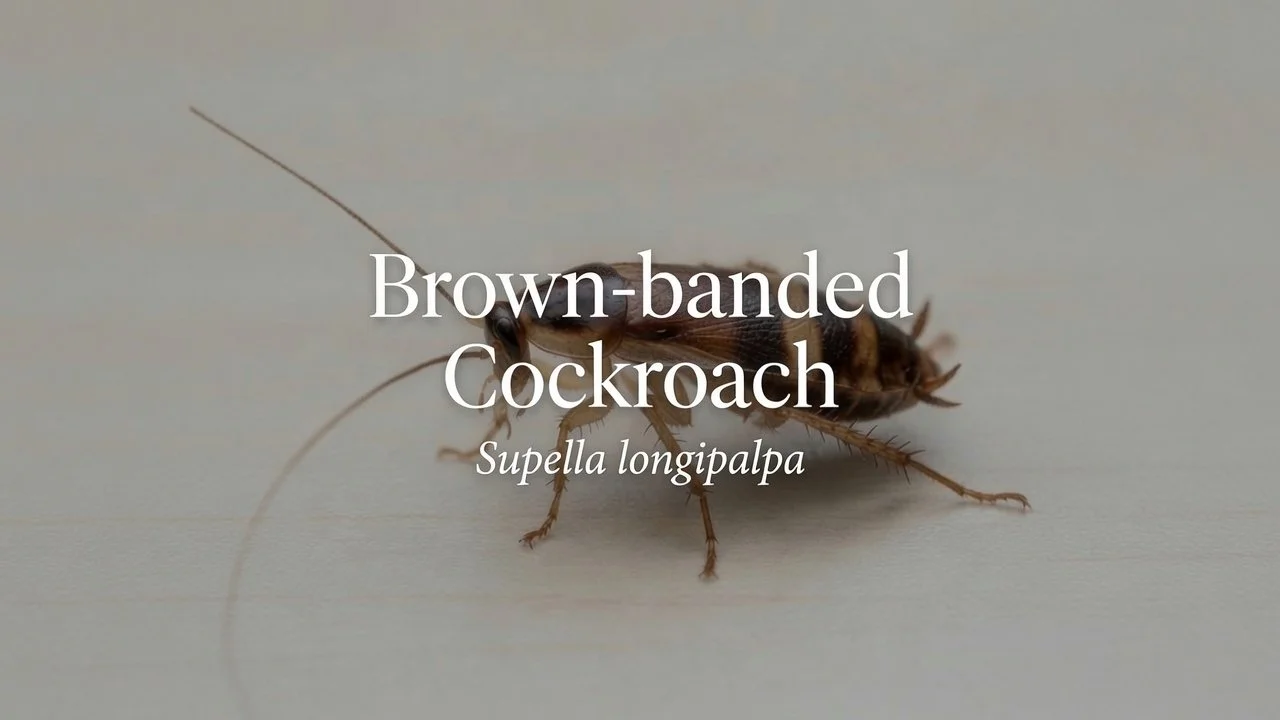
Quick Facts
Scientific name: Supella longipalpa
Adult size: About ½ inch (10–14 mm)
Color: Light brown to tan with two distinctive pale bands across the wings and abdomen
Key difference from German cockroach: Prefers warmer, drier locations higher up in rooms rather than moist kitchens and bathrooms
Identification
Adults are small and light brown to tan. The two pale transverse bands across the wings and abdomen give the species its name and are the clearest field mark. Males are more slender with fully developed wings that cover the abdomen and can fly short distances. Females are broader with shorter wings that leave part of the abdomen exposed.
Nymphs show the banding more clearly. The brown-banded cockroach is often confused with the German cockroach because of similar size, but German cockroaches have two dark parallel stripes on the pronotum (behind the head) instead of the cross-body bands.
Biology & Life Cycle
Females produce egg cases (oothecae) containing roughly 10–18 eggs and attach them to surfaces such as walls, ceilings, furniture, and the undersides of shelves rather than carrying them for long periods. Development from egg to adult typically takes 3–7 months depending on temperature. Adults live several months.
Unlike German cockroaches, brown-banded cockroaches complete their entire life cycle indoors and do not require high moisture.
Habits & Behavior
These cockroaches prefer warm, dry environments (often 80°F+). They are commonly found higher in rooms — upper cabinets, behind picture frames, inside electronics and appliances, ceiling voids, closets, and furniture. They scatter more widely through a structure than German cockroaches and are less tied to kitchens and bathrooms.
They are nocturnal and hide during the day in cracks, crevices, and protected elevated spots.
Signs of Infestation
Live or dead cockroaches, especially in upper areas of rooms
Small dark droppings that look like coffee grounds or black pepper, often on shelves, picture frames, or high surfaces
Egg cases glued to walls, ceilings, furniture, or the undersides of objects
Shed skins
Occasional sightings in living rooms, bedrooms, and closets rather than concentrated only in kitchens
Because they spread throughout the home, infestations can be harder to notice early.
Health & Property Risks
Like other cockroaches, brown-banded cockroaches can contaminate surfaces and trigger allergies or asthma, particularly in sensitive individuals. They may also damage paper, fabric, and certain materials by feeding or nesting. They are less strongly associated with food-handling areas than German cockroaches but still pose hygiene concerns once established.
Prevention Tips
Reduce clutter, especially in closets, storage areas, and upper shelves
Inspect second-hand furniture, electronics, and cardboard boxes before bringing them inside
Keep rooms clean and vacuum regularly, including high surfaces and behind wall decorations
Seal cracks and crevices in walls, cabinets, and around fixtures
Maintain moderate indoor temperatures and reduce unnecessary heat sources where practical
Treatment Approach
Control focuses on thorough inspection of elevated and dry harborage sites throughout the structure. Professional treatment typically includes:
Targeted gel baits placed in preferred locations (upper cabinets, behind frames, inside warm electronics where safe)
Insect growth regulators (IGRs) to disrupt development
Dusts in voids and cracks
Vacuuming of visible insects and egg cases
Follow-up monitoring because populations can be dispersed
Sanitation and exclusion remain important supporting steps. Because these cockroaches are less moisture-dependent, simply cleaning kitchens is often not enough.
When to Call a Professional
Call a licensed pest management professional if you:
Find cockroaches or droppings in multiple rooms, especially upper areas
See egg cases attached to furniture or walls
Have an infestation that is not limited to the kitchen or bathroom
Prefer a complete inspection and targeted treatment plan
Accurate identification matters — treatment placement differs from German cockroach programs.
Local Notes
Brown-banded cockroaches occur in Wisconsin but are less common than German cockroaches. In Racine and southeastern Wisconsin homes they are most often encountered in warmer, drier rooms and multi-unit buildings where they can move between units. Their preference for elevated, dry harborages means inspections must go beyond the typical kitchen and bathroom focus.