
Boxelder Bug (Boisea trivittata)
Quick Facts
Scientific name: Boisea trivittata
Adult size: About ½ inch long
Color: Black with distinctive red/orange markings
Primary host: Female (seed-bearing) boxelder trees (Acer negundo)
Main complaint: Fall and winter nuisance when they enter homes
Identification
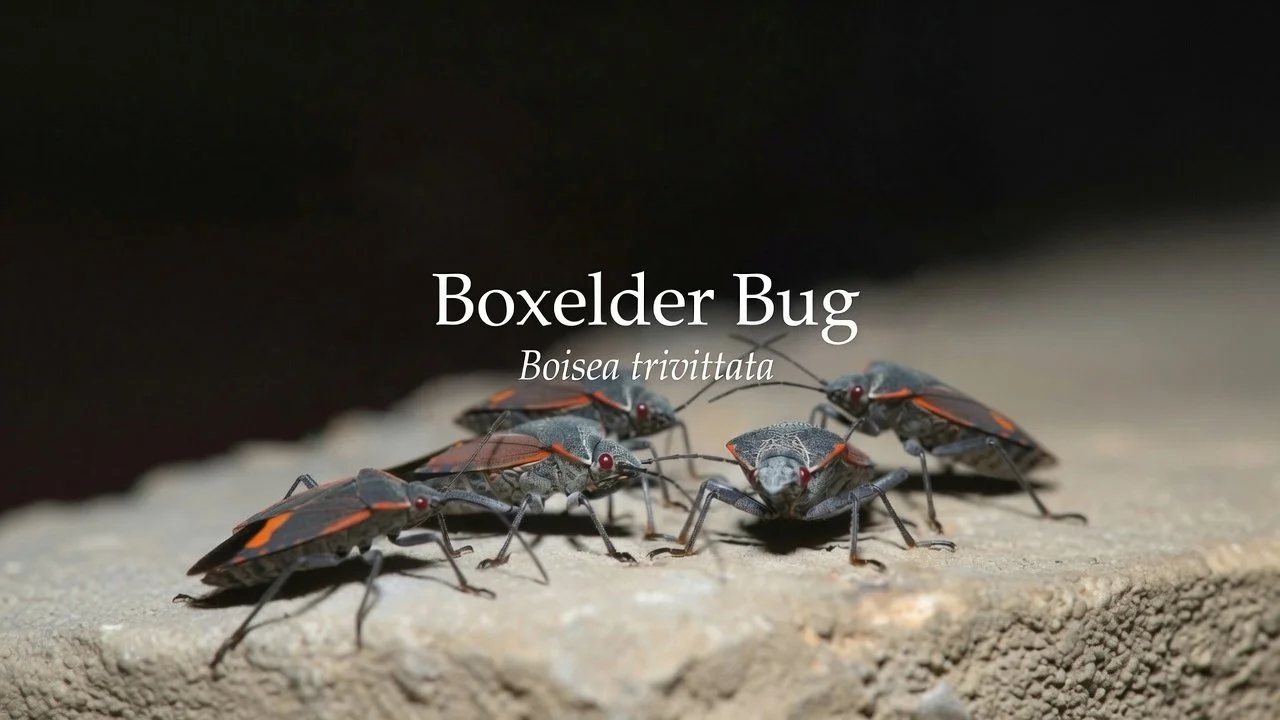
Adults are elongated, black true bugs with red or orange markings: three red lines on the pronotum (area behind the head) and red veins along the edges of the wings that form an “X” when the wings are folded. They have bright red eyes.
Nymphs are mostly bright red when young and develop darker markings as they mature. They lack fully developed wings.
Biology & Life Cycle
Boxelder bugs typically have one or two generations per year in Wisconsin. Overwintering adults emerge in spring and move to host trees. Females lay clusters of red eggs on leaves, bark, or nearby surfaces. Nymphs feed through the summer on seeds and plant juices, primarily on female boxelder trees.
By late summer and early fall, new adults leave the trees and begin searching for overwintering sites. They are strongly attracted to warm, sunny surfaces, especially south- and west-facing walls of buildings.
Habits & Behavior
These bugs feed mainly on the seeds of boxelder and other maples. They cause little real damage to the trees themselves.
In fall they congregate in large numbers on sunny exterior walls, foundations, and other warm surfaces before seeking cracks and gaps to overwinter. Once indoors they remain mostly inactive during cold weather but may become active on warm days. They do not reproduce indoors.
Signs of Infestation
Clusters of black-and-red bugs on sunny exterior walls in fall
Bugs found indoors on windows, walls, or ceilings during fall and winter
Bright red nymphs on or near boxelder trees in summer
Mild odor if the bugs are crushed
Health & Property Risks
Boxelder bugs do not bite, sting, or transmit disease. They do not damage structures, furniture, or stored food. The main issues are:
Nuisance from large numbers entering homes
Mild staining or odor if crushed on light-colored surfaces
Prevention Tips
Seal cracks and gaps around windows, doors, siding, and foundation before fall
Screen attic and soffit vents
Reduce exterior clutter near the foundation
Consider removing or reducing female boxelder trees if they are the primary source (not always practical or desirable)
Vacuum or sweep up outdoor clusters rather than crushing them
Treatment Approach
Outdoors: Focus on exclusion (sealing entry points). Residual insecticides applied to exterior walls and foundations in late summer/early fall can reduce the number that attempt to enter, but exclusion is the long-term solution.
Indoors: Vacuuming is the preferred method. Avoid crushing them when possible. Indoor sprays and foggers are generally unnecessary and not recommended.
When to Call a Professional
Call if:
Large numbers are entering the home every fall
You need help locating and sealing entry points
Outdoor clusters are heavy and near high-traffic areas
Local Notes
Boxelder bugs are a common fall and winter nuisance across Racine County and southeastern Wisconsin, especially near properties with mature boxelder or silver maple trees. South- and west-facing walls of homes and outbuildings see the heaviest activity from September through early November. Numbers vary significantly from year to year depending on summer weather.