
Bed Bugs (Cimex lectularius)
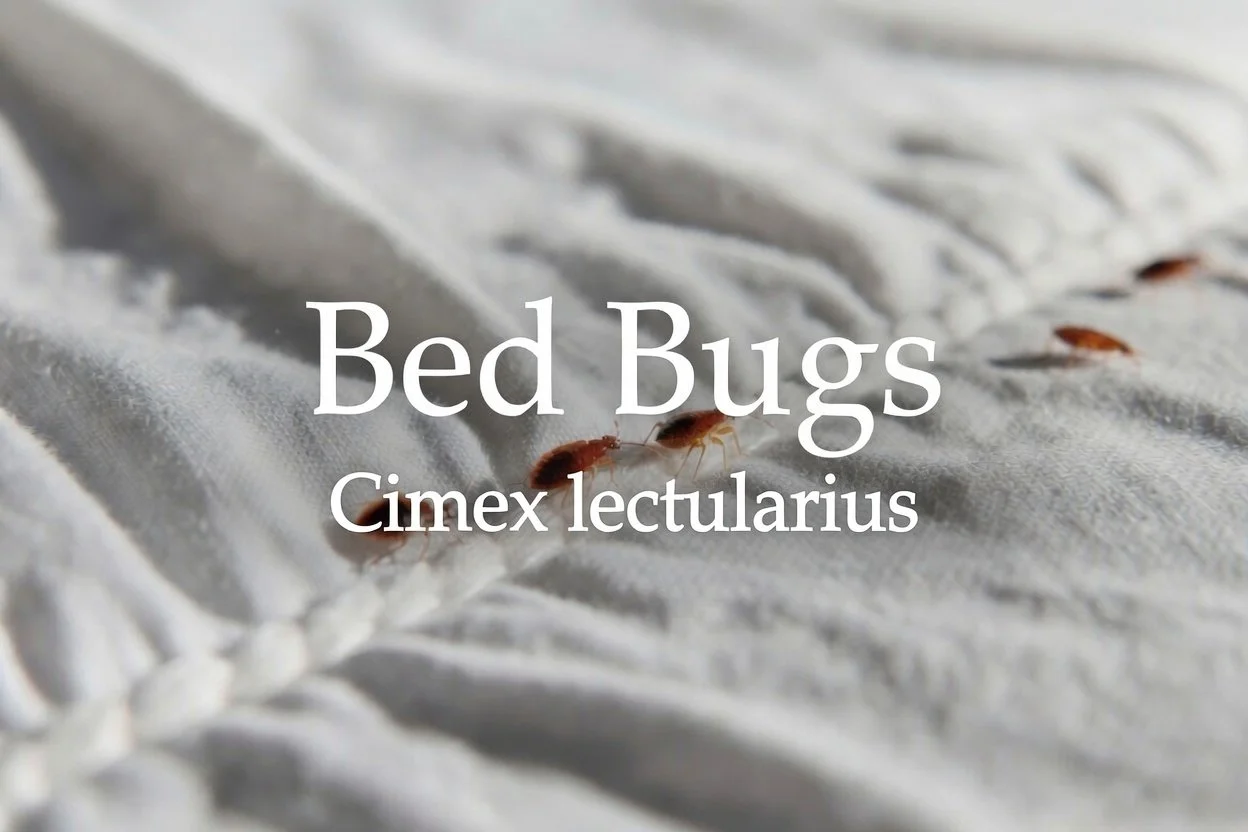
Quick Facts
Scientific name: Cimex lectularius
Adult size: 4–7 mm (about the size of an apple seed)
Color: Reddish-brown when unfed; darker red and more elongated after feeding
Wings: None (they do not fly or jump)
Activity: Year-round indoors in southeastern Wisconsin because of continuous indoor heating
Identification
Adult bed bugs are flat, oval, and wingless. Unfed adults are about the size and shape of an apple seed and reddish-brown. After a blood meal they swell, become more elongated, and turn a deeper red. Young nymphs are much smaller and nearly translucent until they feed. Eggs are tiny (about 1 mm), white, and sticky.
Common look-alikes in the Racine area include bat bugs and carpet beetle larvae. Proper identification matters because treatment approaches differ.
Biology & Life Cycle
Bed bugs undergo incomplete metamorphosis: egg → five nymphal stages → adult. Females can lay 200–500 eggs in a lifetime (typically 1–5 per day after feeding). Eggs hatch in 6–17 days at normal indoor temperatures. Each nymph must take at least one blood meal before molting. Development from egg to adult can take as little as 5 weeks under warm conditions or several months when cooler.
Adults can live several months without feeding. In heated Wisconsin homes they remain active all year.
Habits & Behavior
Bed bugs are nocturnal blood feeders that prefer humans but will feed on pets if necessary. They hide during the day in cracks and crevices close to where people sleep or rest—mattress seams, box springs, bed frames, headboards, baseboards, electrical outlets, furniture joints, and clutter.
They do not live on the host. They travel short distances to feed (usually within a few feet of the bed) and then return to their hiding spots. Infestations commonly start from luggage, used furniture, or movement between units in multi-family buildings common in Racine and surrounding communities.
Signs of Infestation
Look for:
Live bugs (especially along mattress seams and box-spring edges)
Tiny dark fecal spots (digested blood) on sheets, mattresses, or nearby surfaces
Small blood stains on bedding from crushed bugs
Pale yellowish shed skins (exoskeletons)
Clusters of tiny white eggs in seams and crevices
A faint sweet, musty odor in heavier infestations
Bite reactions vary widely. Some people develop itchy red welts; others show little or no reaction. Bites alone cannot confirm an infestation.
Health & Property Risks
Bed bugs are not known to transmit disease in the United States. The main issues are:
Itchy bites that can lead to secondary skin infections from scratching
Allergic reactions in sensitive individuals
Sleep disruption and significant stress
Property impact through the need to treat or discard heavily infested furniture and the cost of professional remediation
In multi-unit housing (apartments, hotels, and older buildings common in Racine County), untreated infestations can spread between units through walls, wiring, and shared items.
Prevention Tips
Inspect hotel rooms and rental units carefully on arrival (check mattress seams, headboards, and furniture).
Keep luggage elevated and off the floor and bed.
Immediately launder and dry (high heat) all clothing and bedding after travel.
Avoid bringing home discarded or second-hand furniture and mattresses without thorough inspection.
Reduce clutter around beds and sleeping areas to limit hiding spots.
Use light-colored sheets so fecal spots and blood stains are easier to notice.
Mattress and box-spring encasements can help with both detection and containment.
Wisconsin winters do not eliminate indoor populations. Continuous heating keeps them active year-round.
Treatment Approach
Successful bed bug control almost always requires a professional integrated approach. Common professional methods used in Wisconsin include:
Thorough inspection and monitoring
Heat treatment (raising room temperatures high enough to kill all life stages)
Targeted residual insecticides and desiccant dusts applied by licensed applicators
Vacuuming, steam, and physical removal of harborages
Mattress encasements and follow-up monitoring
Most insecticides do not reliably kill eggs, so multiple visits spaced to break the life cycle are typical. DIY sprays and “bug bombs” rarely eliminate an established infestation and can make the problem worse by scattering the bugs.
In rental properties, Wisconsin law generally places primary responsibility for treatment on the landlord unless the tenant can be shown to have caused the infestation. Cooperation between tenants, property managers, and the pest control company is essential.
When to Call a Professional
Contact a licensed pest management professional if you:
Find live bed bugs, fecal spots, shed skins, or eggs
Have repeated unexplained bite-like welts that appear after sleeping
Live in a multi-unit building where neighboring units may also be affected
Have tried basic cleaning and still see evidence of activity
Early intervention is far less expensive and disruptive than dealing with a widespread infestation.
Related Local Notes
Bed bugs are regularly reported in hotels, apartments, and multi-family housing throughout Racine County and southeastern Wisconsin. They are not a sign of poor housekeeping—they hitchhike on people and belongings. Prompt, professional treatment combined with resident cooperation is the most reliable path to elimination. of the outcome. Every time you take action despite self-doubt, you reinforce the belief that you’re capable. Confidence isn’t about having all the answers — it’s about trusting that you can figure it out along the way.