
Bald-Faced Hornet (Dolichovespula maculata)
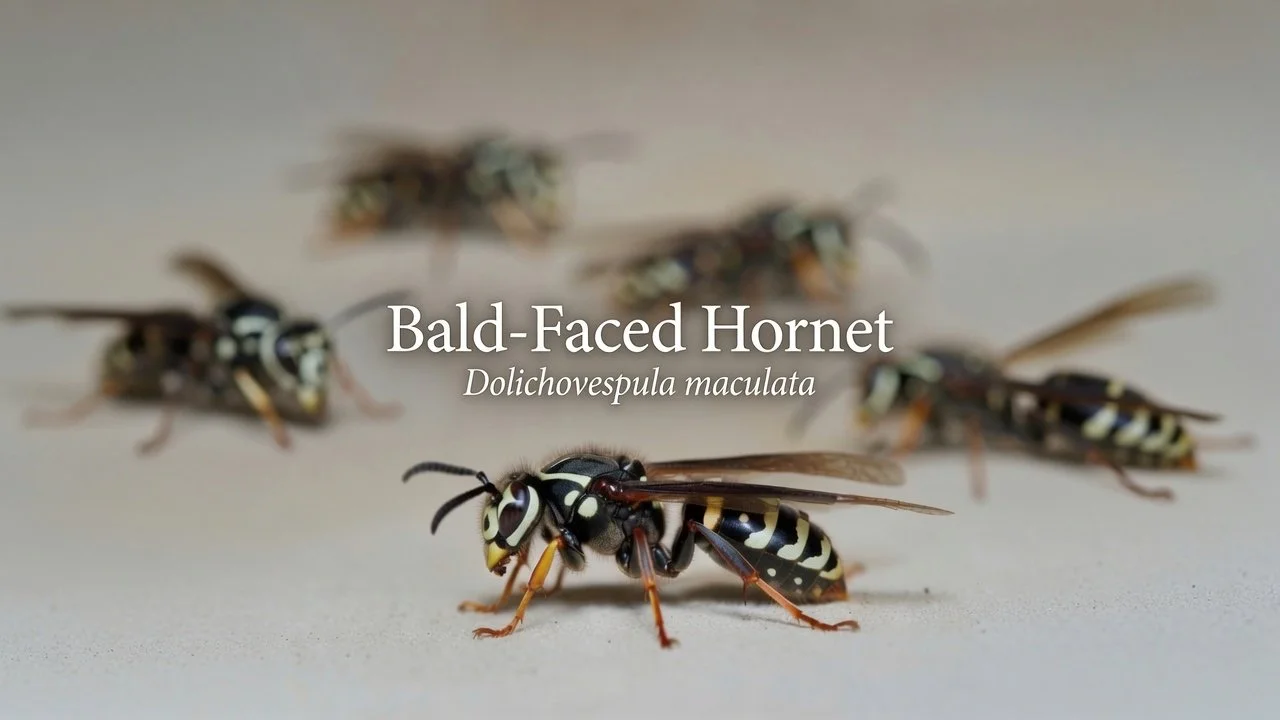
Quick Facts
Scientific name: Dolichovespula maculata
Adult size: About ½ to ¾ inch (queens larger)
Color: Black with distinctive white markings on the face and abdomen
Nest: Large gray paper nest, usually aerial
Note: Despite the common name, it is a type of yellowjacket, not a true hornet
Identification
Bald-faced hornets are large black wasps with a white or ivory “face” and white markings on the thorax and the last few segments of the abdomen. Wings are smoky. They are noticeably larger than most other yellowjackets.
They are often confused with other social wasps, but the bold black-and-white pattern and white face are distinctive.
Biology & Life Cycle
Colonies are annual. A fertilized queen starts a new nest in spring. Workers expand the nest throughout the summer, and the colony can grow to several hundred individuals by late summer. New queens and males are produced in late summer to early fall. The colony dies with hard freezes; only new queens overwinter.
Nests are made of chewed wood fibers mixed with saliva, forming the familiar gray paper envelope.
Habits & Behavior
Bald-faced hornets are aerial nesters. They typically build large, football- or teardrop-shaped paper nests in trees, shrubs, under eaves, or on other elevated structures. The entrance is usually near the bottom.
They are predatory and also take nectar and fruit. Workers are aggressive defenders of the nest and can sting repeatedly. Activity peaks in late summer when the colony is largest.
Signs of Infestation
Large gray paper nest hanging in a tree, shrub, or under a building overhang
Steady traffic of large black-and-white wasps flying to and from a fixed location
Increased defensive behavior if the nest area is approached
Health & Property Risks
Bald-faced hornets can sting multiple times and will defend their nest vigorously. Stings are painful and can cause allergic reactions in sensitive individuals. Nests near doorways, walkways, decks, or play areas create a significant safety concern. They do not cause structural damage.
Prevention Tips
Monitor trees, shrubs, and eaves in spring and early summer for small developing nests
Keep outdoor trash cans covered
Avoid leaving sugary drinks or ripe fruit exposed outdoors in late summer
Seal potential entry points into structures if nests are found near the building
Treatment Approach
Do not attempt to treat a large or active nest yourself. Professional treatment typically involves:
Locating the nest
Applying insecticide after dark when most workers are inside
Confirming the colony is eliminated
Removing the nest once activity has ceased (optional but recommended for high-traffic areas)
Ground-level or easily accessible nests can sometimes be treated carefully with proper protective equipment, but aerial nests often require professional equipment and experience.
When to Call a Professional
Call if:
The nest is near high-traffic areas (doors, decks, play equipment, walkways)
Anyone in the household has a known sting allergy
The nest is large or high off the ground
You are not comfortable treating it safely
Local Notes
Bald-faced hornets are common across Racine County and southeastern Wisconsin. Nests are frequently found in trees, tall shrubs, and under building eaves from mid-summer through early fall. Colonies reach peak size and aggressiveness in August and September before dying out with hard freezes.