
How the Heck Are These Mice Getting In?
A practical look at the tiny openings, overlooked entry points, and structural issues that can turn your home into a winter hideout.

Fast FACTS: MICE & YOUR HOME
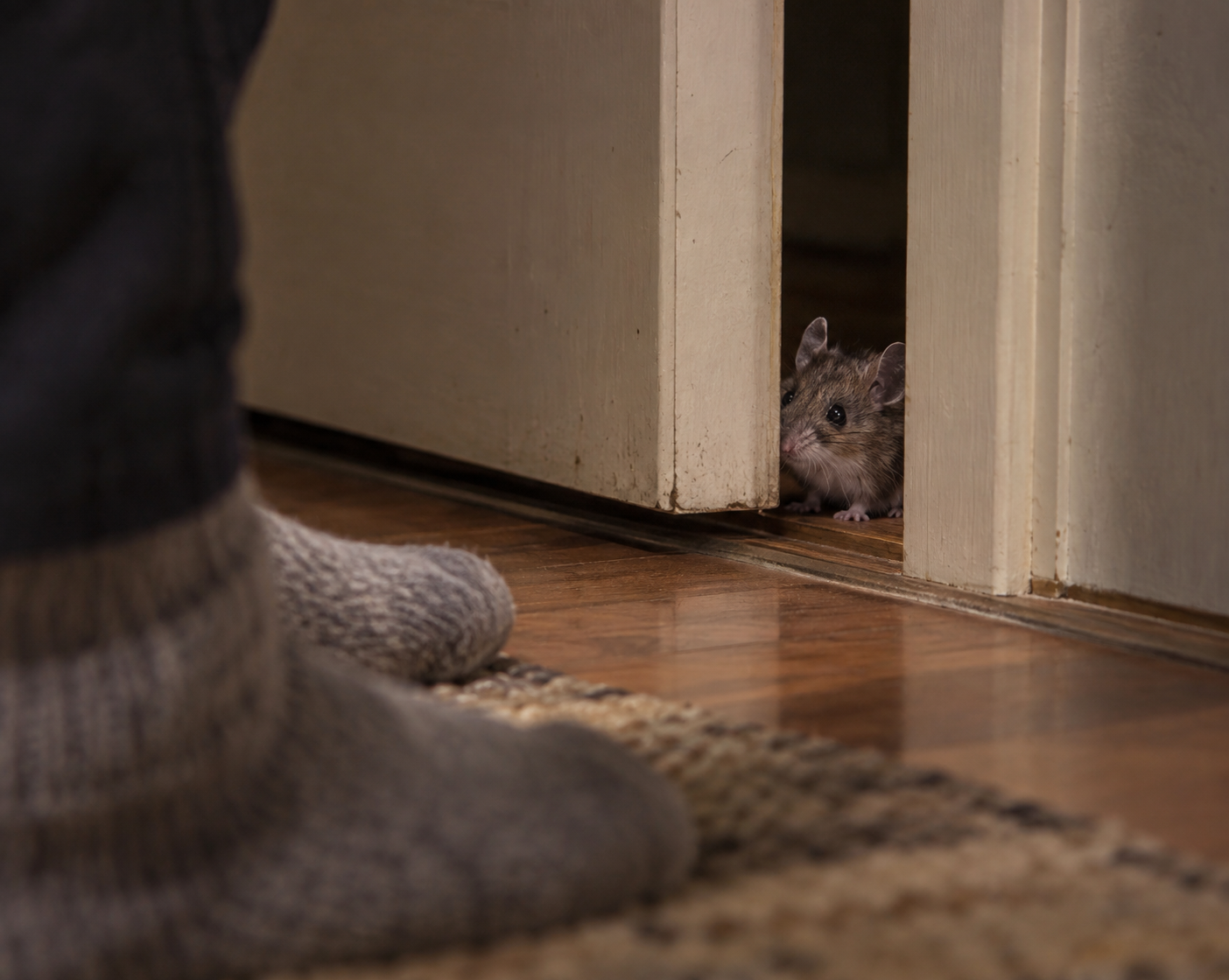
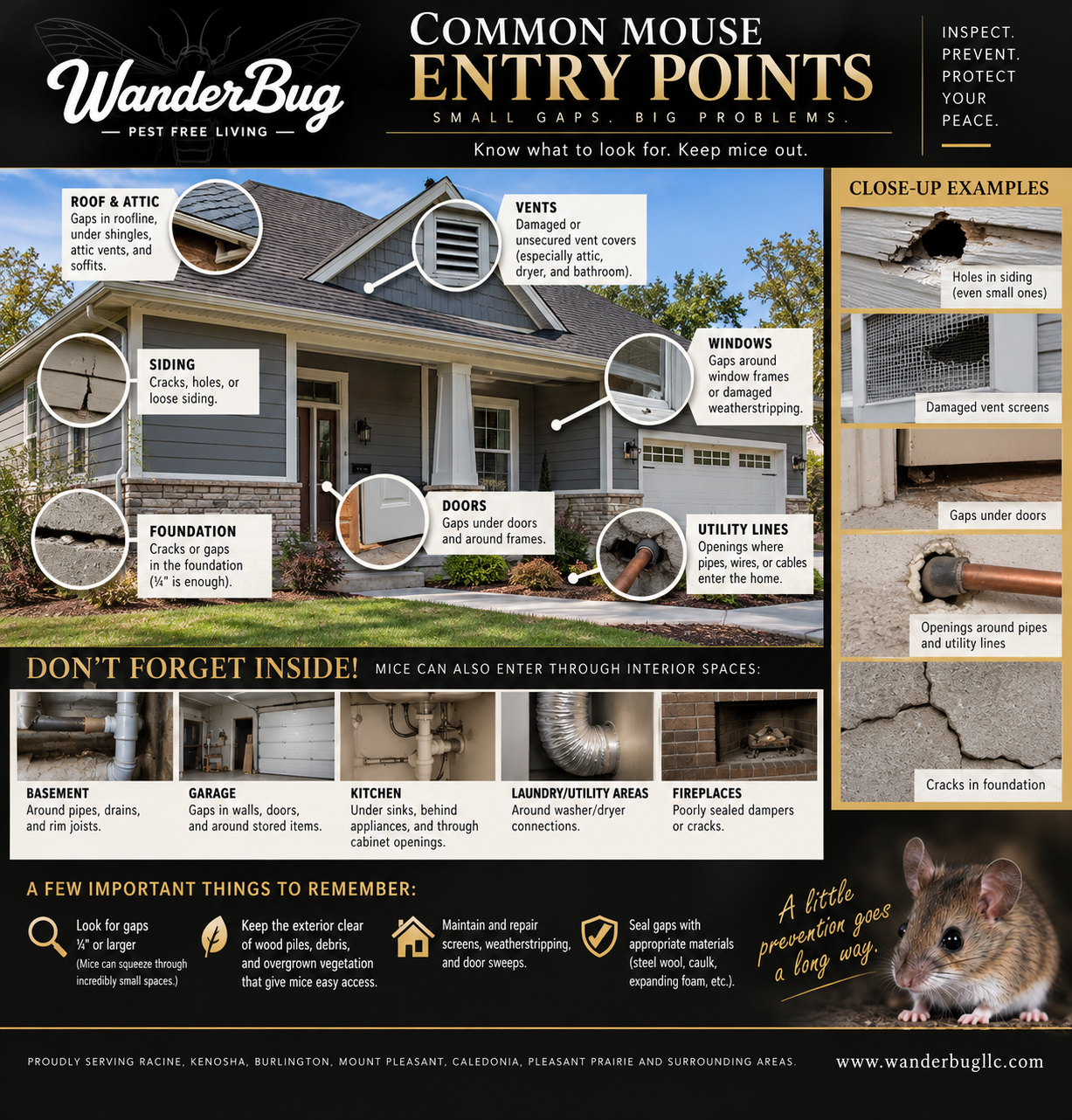
Mice can squeeze through surprisingly small openings — gaps around ¼ inch can be enough.
One small opening is rarely the only one. Homes often have multiple potential entry points.
Doors, foundations, utility lines, vents, and siding are common places to inspect.
Mice don't always enter at ground level. Rooflines, soffits, and damaged vents can also provide access.
Finding a mouse indoors doesn't automatically tell you where it entered. The entry point may be some distance away.
Keeping vegetation, debris, and stored materials away from the home can reduce shelter and make inspection easier.
Sealing entry points is one of the most important parts of long-term mouse prevention.
Fall arrives in Wisconsin, the temperatures start dropping, and suddenly something changes.
You hear a noise in the wall.
You find a few suspicious droppings in the basement.
Maybe the dog is suddenly very interested in one particular corner of the kitchen.
And eventually, someone sees it.
A mouse.
Then comes one of the most common questions in pest control:
How the heck are these guys getting in?
It's a fair question. Your doors are closed. Your windows are shut. You don't have a giant mouse-sized hole in the side of your house.
So how did it get inside?
The short answer is: mice are extremely good at finding opportunities.
And that's one reason pest professionals often spend as much time looking at the outside of a structure as they do looking for evidence of mice inside.
Mice Don't Need a Front Door
When people imagine a mouse entering a home, they often picture an obvious hole somewhere in the wall.
Sometimes it really is that simple.
But many entry points are much less obvious.
Mice can take advantage of surprisingly small openings and gaps around a structure. Areas around utility lines, plumbing, doors, foundations, and other structural features can all create opportunities for rodents to get inside.
Some of the most common areas worth inspecting include:
Gaps around pipes and utility lines entering the building
Worn or damaged door sweeps
Gaps around garage doors
Openings where different building materials meet
Foundation gaps and damaged areas
Utility penetrations
Damaged or improperly maintained vents
Gaps around windows and other exterior openings
The important thing to remember is that a mouse doesn't need an invitation. It just needs an opportunity.
Where You Find the Mouse Isn't Always Where It Got In
This is an important one.
Finding droppings in the basement doesn't necessarily mean the mouse entered through the basement.
Finding activity in the kitchen doesn't necessarily mean there is a hole behind the refrigerator.
Mice can move through structures using wall voids, utility areas, plumbing and wiring pathways, garages, basements, and other protected spaces.
That means the location where you find evidence of activity may be very different from the location where the mouse originally entered the structure.
This is one reason rodent inspections can take some detective work.
We're looking at the evidence inside—but we're also looking for opportunities outside.
The Usual Suspects
Every structure is different, but there are a few areas that deserve extra attention.
1. Doors That Don't Quite Close
A damaged door sweep or a gap beneath a service door can create an easy opportunity for rodents.
Garage doors can also be overlooked. Weather stripping deteriorates, doors settle, and small gaps can develop over time.
You may walk past the same door every day without noticing a gap that becomes much more obvious when you're specifically looking for rodent access.
2. Pipes and Utility Lines
Homes have plenty of things entering them.
Water lines. Electrical service. HVAC components. Communication lines. Air-conditioning lines.
Where those materials pass through an exterior wall or foundation, gaps can sometimes develop.
These areas are worth inspecting because they can create protected pathways into a structure.
3. Foundations and Structural Gaps
Buildings move.
Materials expand and contract.
Caulk deteriorates.
Repairs are made.
Over time, small gaps and openings can develop.
This doesn't necessarily mean there is something seriously wrong with the structure. It simply means that homes change over time—and sometimes those changes create opportunities for pests.
4. Attached Garages
Garages can be an important part of the story.
They provide shelter from the weather and can contain plenty of hiding places. If rodents gain access to an attached garage, they may have additional opportunities to move toward other areas of the structure.
That doesn't mean every mouse found in a home came through the garage.
But it does mean the garage deserves attention during a rodent inspection.
Why Do Pest Management Companies Keep Talking About Holes?
Because getting rid of the mice currently inside a structure and reducing opportunities for future mice to enter are two different jobs.
A rodent management program may involve monitoring, trapping, baiting where appropriate, and evaluating areas where rodents are active.
But if a structure has accessible openings that continue to provide opportunities for rodents, that information matters too.
This is where structural recommendations and exclusion can become part of the conversation.
Some pest management companies offer exclusion services as part of their rodent management programs. Others focus on managing the rodent population while identifying structural concerns for the homeowner or another qualified professional to address.
Neither approach automatically makes one company better than another.
The important question is whether the conditions contributing to rodent access are being considered.
Why We Give Structural Recommendations
When a pest professional points out a gap around a utility line or a damaged door sweep, they aren't necessarily claiming:
“This is definitely where every mouse is getting in.”
Pest management isn't always that simple.
Instead, we're identifying a condition that may provide rodents with an opportunity to enter.
There is a difference.
A good inspection looks at the information available—the evidence of rodent activity, the structure itself, and the potential pathways that could allow access.
Sometimes the evidence strongly points to a particular area.
Other times, there may be several possible entry points.
Either way, reducing unnecessary opportunities for rodents to enter is generally a reasonable part of a long-term management strategy.
Why Isn't Every House Completely Sealed?
Because houses aren't airtight boxes.
They move. Materials age. Weather affects them. New utility lines get installed. Doors wear out. Caulk cracks.
Even a home that has had extensive exclusion work performed can develop new opportunities for pests over time.
The goal isn't necessarily to turn a home into a completely sealed bubble.
The goal is to identify and address reasonable, accessible opportunities for rodents to enter.
Sometimes that involves simple maintenance.
Sometimes it involves more extensive exclusion work.
And sometimes an opening needs to be evaluated or repaired by someone with specialized construction experience.
Don't Forget About the Outside
The exterior environment can also influence rodent activity.
Mice naturally look for food, shelter, and protection. Conditions around a structure can provide cover and opportunities for rodents to spend time near the building.
Depending on the property, that might include:
Stored materials near the structure
Dense vegetation creating protected areas
Firewood or other stacked materials
Food sources such as spilled bird seed or accessible pet food
Cluttered areas around garages or sheds
This doesn't mean that having a bird feeder automatically causes a mouse infestation.
And cleaning up a yard won't magically make every mouse disappear.
Rodent activity is more complicated than that.
However, reducing unnecessary shelter and food opportunities around a structure can be one piece of an overall rodent management strategy.
So, What Can You Actually Do?
Start with a walk around your home.
Look at the areas where things enter the structure.
Check doors and door sweeps.
Take a look at the garage.
Look around utility lines and pipes.
Pay attention to areas where different materials meet.
You're not necessarily trying to diagnose your entire rodent problem yourself. You're simply looking for obvious conditions that may deserve attention.
And if you're already working with a pest professional, don't ignore structural recommendations just because you've caught a few mice.
Removing the rodents currently inside and reducing future opportunities for rodents to enter can work together.
You Don't Have to Find Every Mouse Door Yourself
Finding a mouse in your home doesn't automatically mean your house is dirty.
It doesn't necessarily mean your home is poorly maintained.
And it definitely doesn't mean you're the only person in Wisconsin dealing with mice when the weather starts changing.
Mice are incredibly good at taking advantage of small opportunities—especially when colder weather encourages them to look for warmth and shelter.
The goal isn't always to find one dramatic hole and declare the mystery solved.
Sometimes rodent management involves looking at the bigger picture.
Where is activity occurring?
What conditions may be contributing to the problem?
And where is the structure giving rodents an opportunity they shouldn't have?
Getting rid of the mice currently inside is important.
Helping reduce the opportunities for the next ones to get inside can be just as important.
And sometimes, the answer to “How the heck are these guys getting in?” starts with looking at your home a little differently.