
Why Are Boxelder Bugs Taking Over My House? A Wisconsin Fall Tradition
Boxelder Bug Fast Facts
Common name: Boxelder bug
Scientific name:Boisea trivittatus
Family: Rhopalidae
Size: About ½ inch as an adult
Primary host: Boxelder trees, especially female seed-producing trees
Other hosts: Some maples, ash, and other plants
Peak nuisance period: Late summer through fall
Where they overwinter: Wall voids, attics, cracks, foundations, and other protected spaces
Danger to people: None
Damage to homes: None
Main problem: Nuisance and occasional staining
Best prevention: Seal entry points before fall
If you've lived in Southeastern Wisconsin for a while, you've probably seen them.
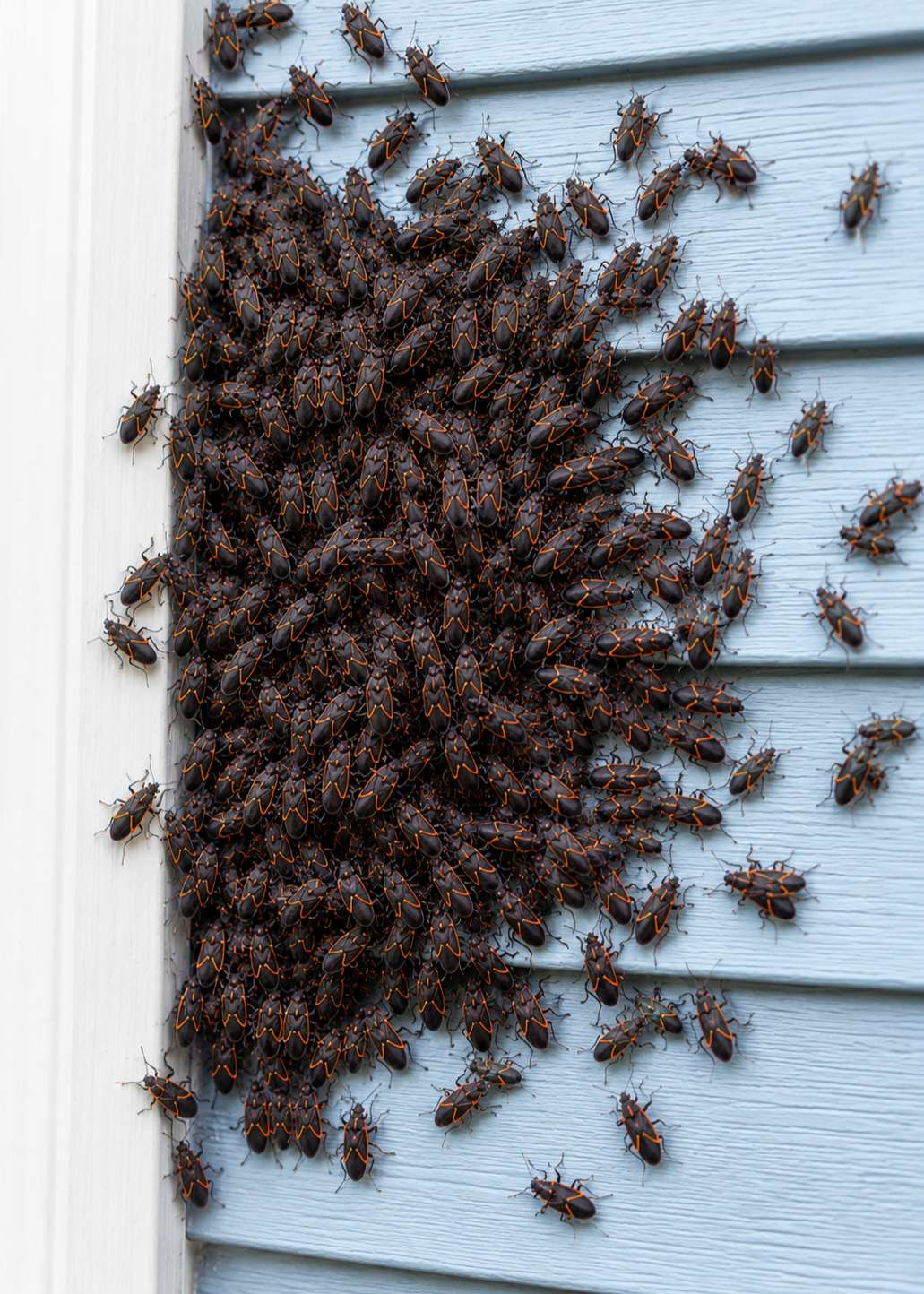
A few red-and-black bugs appear on the sunny side of the house. Then a few more show up. Before long, it can seem like the entire side of the building is moving.
Boxelder bugs are one of those pests that seem to appear out of nowhere every fall.
The good news? They're not dangerous, they don't damage your home, and they aren't trying to invade your house because they want to live there.
They're looking for somewhere to spend the winter.
And in Southeastern Wisconsin, your home can look like a pretty good option.
What Is a Boxelder Bug?
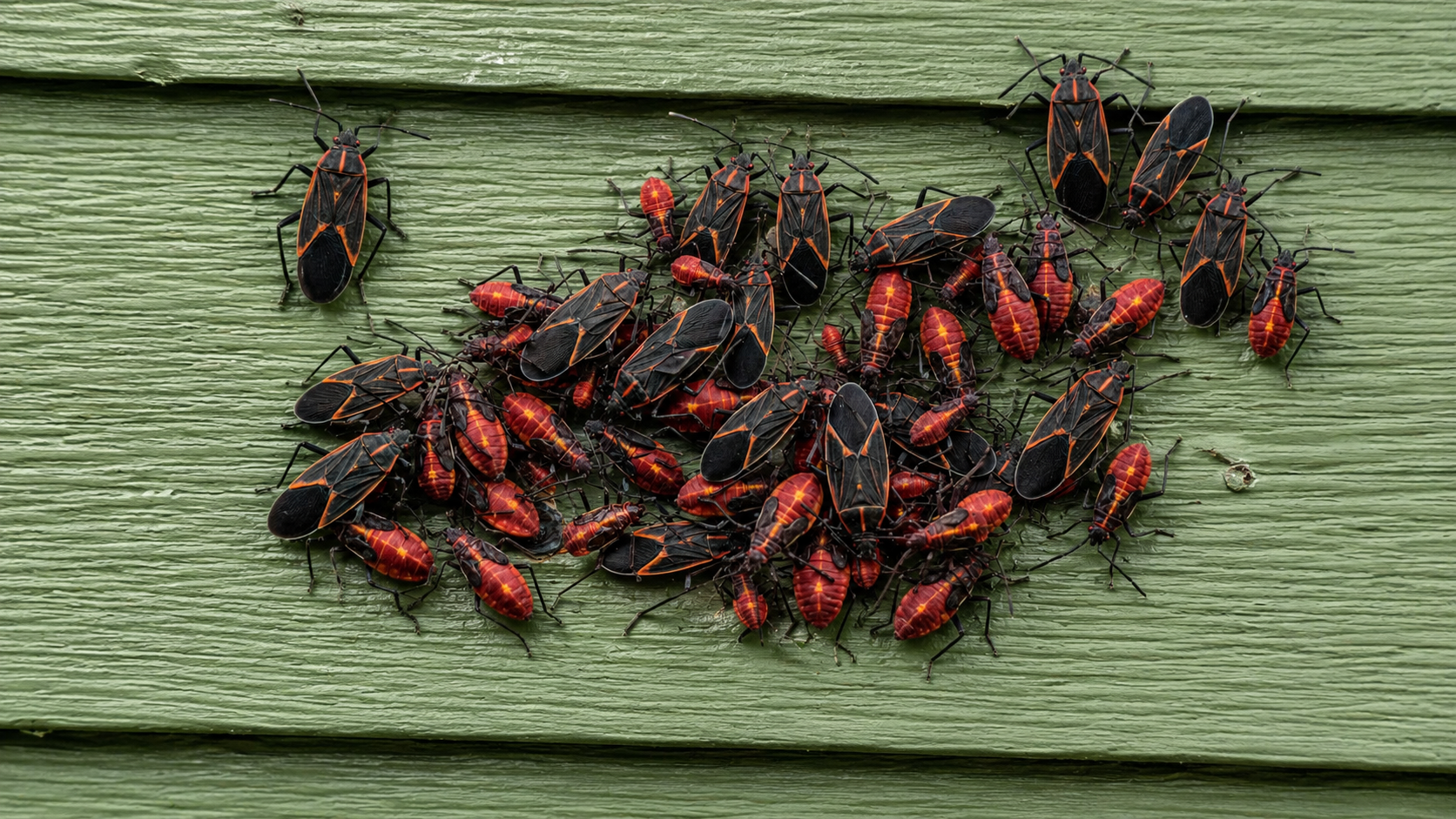
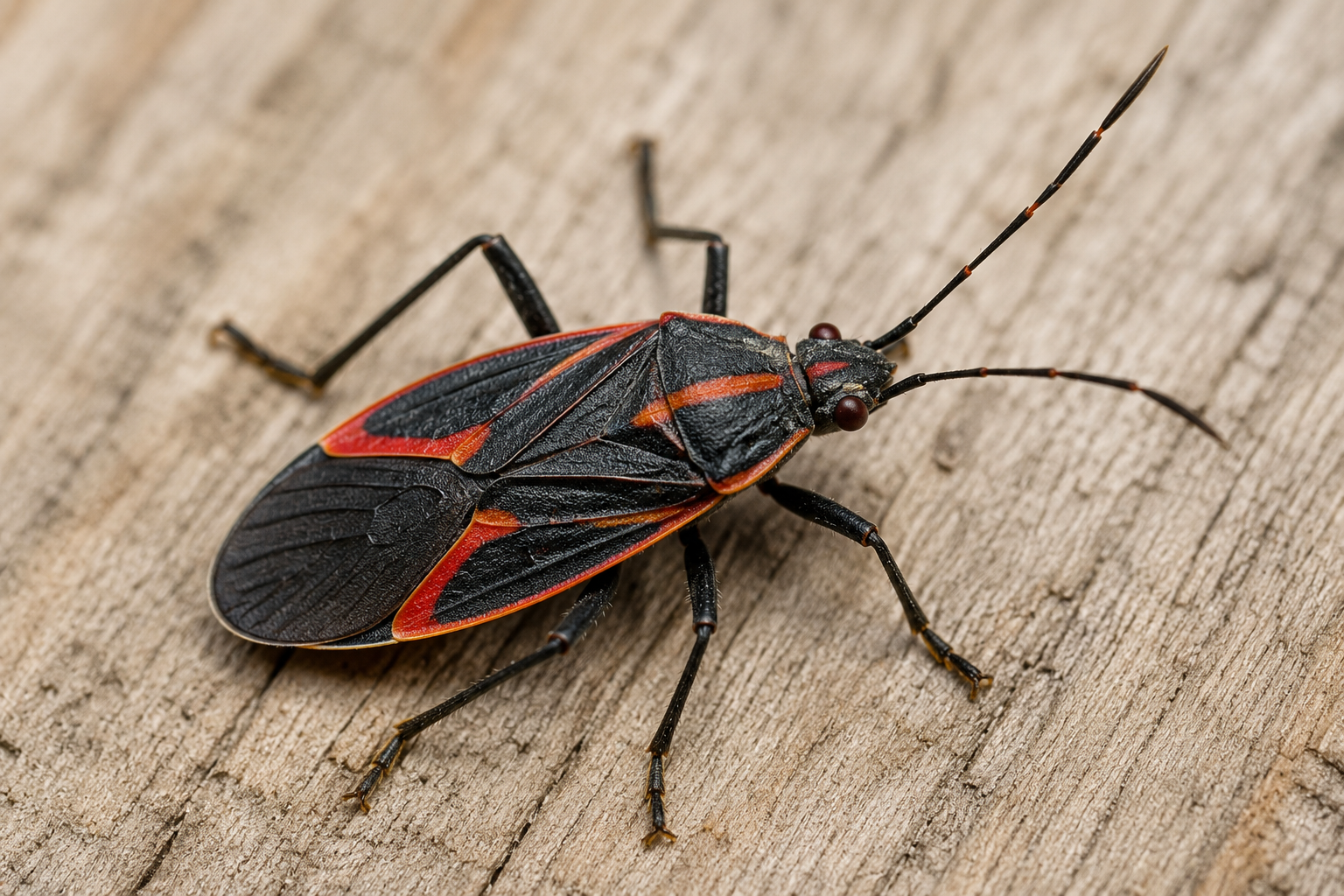
The boxelder bug, Boisea trivittatus, is a true bug in the family Rhopalidae. Adults are generally around half an inch long and are dark gray to black with distinctive red markings along their bodies and wings. The young, called nymphs, are much smaller and are often predominantly red with darker heads and developing wing pads.
They're closely associated with boxelder trees (Acer negundo), particularly female trees that produce the seeds boxelder bugs feed on.
They may also be found on other maples and ash trees, but boxelders are their primary host.
And despite their reputation, boxelder bugs aren't particularly destructive.
They feed by sucking plant juices, but they rarely cause significant damage to healthy trees.
Wait... There Are Male and Female Boxelder Trees?
Yep.
Boxelder trees are generally dioecious, meaning individual trees are typically either male or female. Female trees produce the familiar winged seeds, while male trees produce pollen but do not produce those seeds.
And here's where things get interesting for our little red-and-black visitors.
Boxelder bugs are particularly associated with female, seed-producing boxelder trees during their summer development. University of Minnesota Extension notes that they are rarely found on male boxelder trees, while Penn State Extension likewise notes that populations prefer development on female trees.
And boxelder bugs have a particular appreciation for the ladies.
This doesn't necessarily mean that every female boxelder tree is going to create a boxelder-bug problem. Adult bugs can travel considerable distances from their host trees, so the source of an infestation may not even be on your property.
The Fall Boxelder Bug Explosion
Boxelder bugs have a fairly straightforward seasonal cycle.
Adults that survived the winter become active in spring. Females lay eggs on suitable host plants, and the eggs typically hatch in roughly 10–14 days.
The nymphs feed and develop through the summer before becoming adults.
By late summer and early fall, that new generation is looking for a place to spend the winter.
That's when homeowners in Southeastern Wisconsin tend to notice them.
Suddenly, the bugs aren't just in the trees.
They're on the house.
Why Are They All Over the Sunny Side of My House?
This is one of the easiest ways to recognize boxelder bug behavior.
On a warm fall afternoon, boxelder bugs often congregate on the sunny sides of buildings—particularly south- and west-facing walls where the afternoon sun can warm the surface.
They're essentially using the building as a giant solar heater.
To a boxelder bug, a sunny south-facing wall is basically beachfront property.
The warmer surface provides a favorable place to gather while they're searching for protected overwintering locations.
That's why you may walk around your house on a cool October morning and see almost nothing, only to find hundreds of bugs covering a sunny wall later that afternoon.
They're responding to the temperature.
How Do Boxelder Bugs Get Inside?
Once they've gathered around a building, they start looking for cracks, gaps, and other protected spaces where they can spend the winter.
They can enter through surprisingly small openings around:
Windows
Doors
Siding
Utility penetrations
Pipes
Foundation cracks
Other gaps in the building envelope
Once inside, boxelder bugs commonly settle into wall voids, attics, and other protected areas.
And here's the part that surprises many homeowners:
They aren't actually trying to get into your living room.
They're looking for shelter.
If they remain cool inside a wall or attic, they may stay inactive for much of the winter. But a warm spell—or heat from the building itself—can wake them up.
That's when you may suddenly start finding them crawling around windows, ceilings, walls, or other areas inside the house.
Do Boxelder Bugs Damage Your House?
No.
This is one of the most important things to understand about them.
Boxelder bugs do not chew through your house, destroy wood, reproduce inside your walls, or damage your food or belongings.
They also don't normally bite people or pets.
Their primary problem is that they are a nuisance.
Large numbers can be unpleasant to deal with, and their waste can occasionally stain light-colored surfaces such as curtains or walls.
They're basically houseguests who don't pay rent, don't contribute to utilities, and have absolutely no plans to leave until spring.
So if you find a handful of boxelder bugs inside during the winter, you don't need to panic.
Your house isn't being eaten.
You've simply provided an overwintering location.
Why Are Some Years Worse Than Others?
This is where Wisconsin weather can make a difference.
Boxelder bug populations can be particularly high following warm conditions and dry periods, although populations can vary considerably from one location to another. Wet weather can also help suppress populations through fungal diseases that affect the insects.
That means there isn't necessarily a simple formula for predicting exactly how bad a particular fall will be.
Two neighboring properties can experience very different numbers of boxelder bugs.
And even if you don't have a boxelder tree in your own yard, that doesn't necessarily mean you're in the clear.
Adult boxelder bugs are capable of traveling considerable distances from their host trees.
Does Having a Boxelder Tree Mean You're Going to Have Boxelder Bugs?
Not necessarily.
But it can certainly increase the potential for activity.
Female boxelder trees produce seeds that are an important food source for developing boxelder bugs. If you have a heavily infested female boxelder near your home, you may see more activity in the surrounding area.
Removing a boxelder tree can reduce a local breeding source, but it isn't guaranteed to solve the problem because adult bugs can travel from other trees.
And from a practical standpoint, removing a mature shade tree just because it happens to support boxelder bugs isn't always the best solution.
There are often better ways to manage the problem.
What Can You Do Before Fall?
If you've dealt with boxelder bugs before, late summer is the time to start thinking about prevention.
The most important step is keeping them from getting inside.
Look around the exterior of your home for obvious openings around:
Windows
Doors
Foundation cracks
Siding
Utility lines
Pipes
Other exterior penetrations
Sealing these openings can reduce the number of insects that are able to enter. Repairing damaged screens and maintaining tight-fitting doors can also help.
You can also remove accumulated seeds and debris around the property where practical.
But don't expect yard cleanup alone to eliminate the problem.
Boxelder bugs can travel, and the trees supporting them may not even be on your property.
What If They're Already Inside?
For the occasional boxelder bug, the simplest solution is usually the least complicated:
Vacuum it up.
UW-Madison Extension specifically recommends vacuuming indoor boxelder bugs rather than relying on indoor insecticide applications. If you vacuum large numbers, dispose of the contents promptly because live insects may be able to escape back out of the vacuum.
And remember: seeing a few inside during the winter doesn't necessarily mean you have a current infestation.
It may simply mean that last fall's boxelder bugs found their way into the building and are now becoming active when conditions warm up.
When Does Professional Pest Management Make Sense?
If boxelder bugs are consistently covering the exterior of your home every fall or you're finding significant numbers inside, professional treatment can be worth considering.
The goal isn't simply to kill the bugs you can see.
A better approach is to consider where they're coming from, where they're congregating, and how they're getting into the building.
Exterior treatments can be used to reduce the number of insects congregating around the structure, while sealing potential entry points can help prevent them from getting inside.
Timing matters, too.
Once large numbers of boxelder bugs have already moved into wall voids and protected areas, treating the exterior may not address every insect that is already inside. Preventative work before or during the period when they begin congregating can be more useful.
Southeastern Wisconsin's Annual Fall Visitor
Boxelder bugs aren't going anywhere.
They're a normal part of Wisconsin's insect population, and for most homeowners, they're more annoying than harmful.
If you're seeing them on the sunny side of your home in September or October, what you're seeing is usually part of their normal seasonal behavior: they're taking advantage of warm surfaces while searching for protected places to spend the winter.
A few bugs aren't cause for concern.
Hundreds covering the side of your house every fall may be a different story.
The good news is that understanding why they're there makes them much easier to manage.
And if you've got a wall that looks like it's moving every October, you're definitely not the only one in Southeastern Wisconsin.
The WanderBug Takeaway
Boxelder bugs are one of those pests where prevention makes more sense than panic.
They're not destroying your house. They're not trying to reproduce in your walls. And they're not looking to bite you.
They're simply looking for somewhere warm and protected to ride out a Wisconsin winter.
If your home consistently becomes that somewhere, the answer isn't necessarily to remove every tree in the neighborhood.
Start with the building itself.
Find the openings. Seal them. Pay attention to the sunny sides of the structure as fall approaches. And if the numbers are overwhelming, address the problem before the bugs disappear into the walls for the winter.
That's usually a much better strategy than waiting until they're crawling across your living-room ceiling in January.
Sources & Further Reading
University of Wisconsin–Madison Division of Extension — Boxelder Bug, Boisea trivittatus
Our primary Wisconsin-specific reference for identification, life cycle, seasonal behavior, overwintering, entry points, and management.
University of Wisconsin–Madison Division of Extension — Boxelder Bugs
Additional Wisconsin-specific information on seasonal activity, overwintering, population fluctuations, prevention, and control.
University of Minnesota Extension — Boxelder Bugs
Supporting information on identification, life cycle, female seed-bearing trees, sunny building exposures, exclusion, and management.
University of Minnesota Extension — Boxelder
Reference for the boxelder tree itself, including male and female trees and the production of winged seeds by female trees.
Penn State Extension — Boxelder Bug
Additional information on identification, life history, development on female trees, overwintering behavior, and management. Updated June 24, 2026.