
Let’s Talk About Honeybees & Pest Control
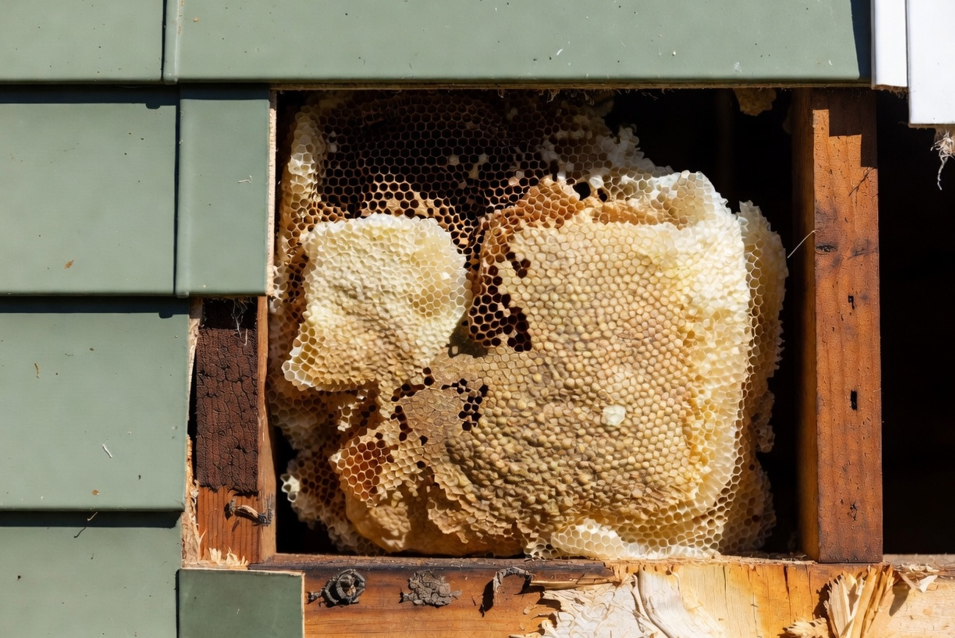
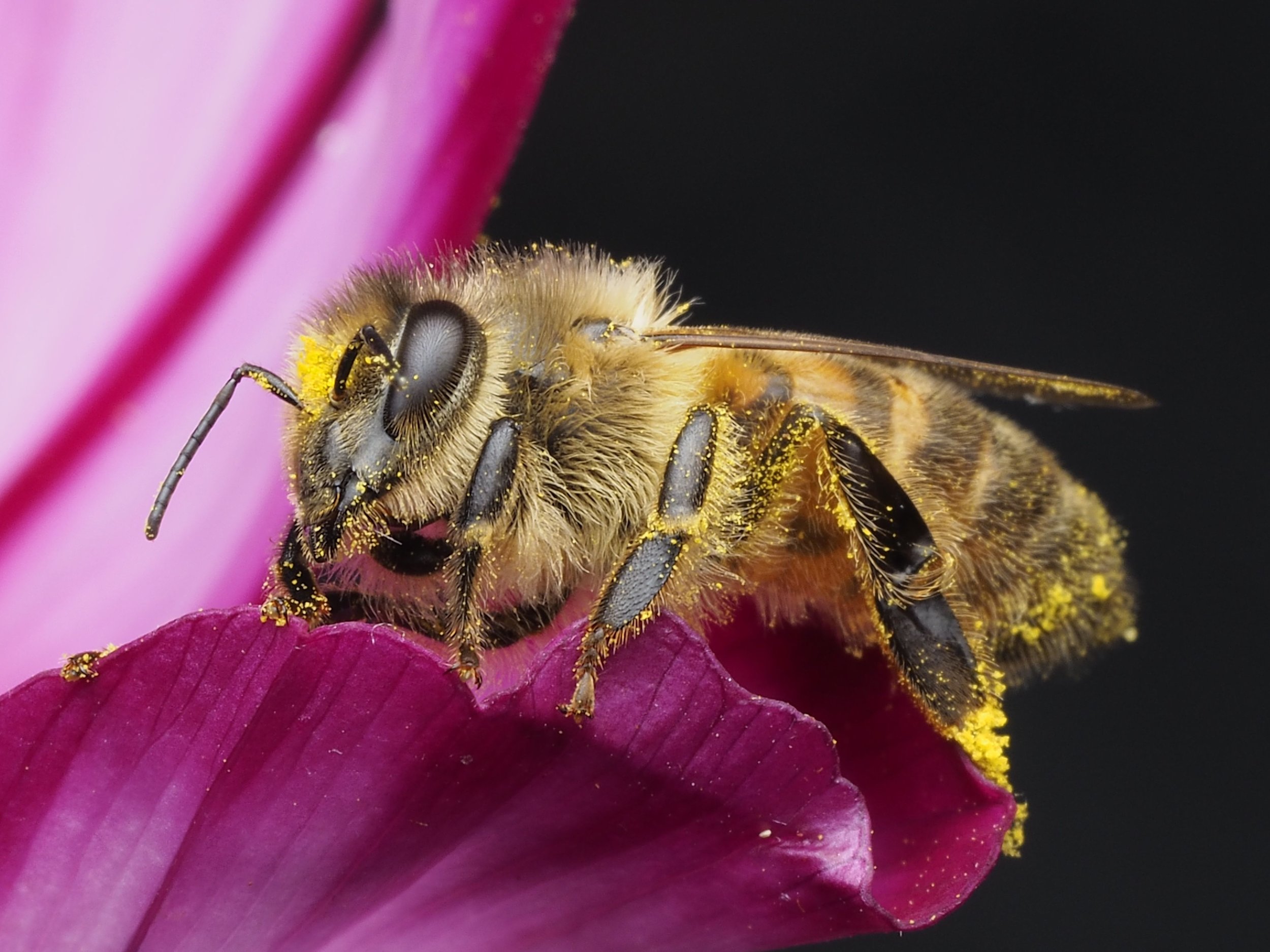
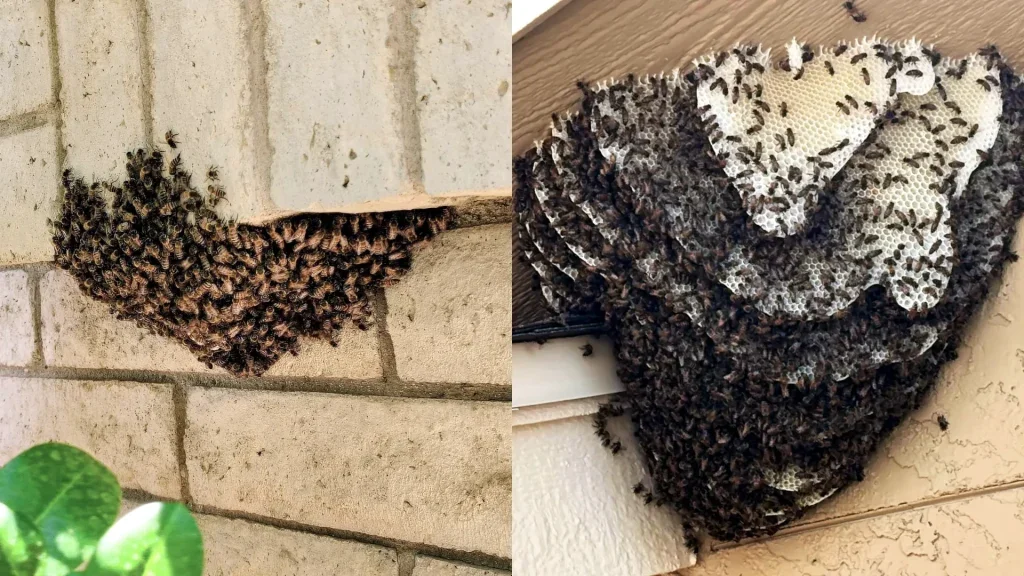

Walk outside on a warm Wisconsin morning and you’ll often hear it before you see it — that soft, steady buzz moving from flower to flower. Honeybees are one of the few insects most people actually feel good about. They make honey, they pollinate the food we eat, and they have a reputation as hardworking, beneficial neighbors.
So when a colony shows up in a wall, a chimney, or under a deck, the first reaction is often confusion mixed with concern. What do you do? Call a pest control company? Call a beekeeper? Leave them alone?
The answer, like most things in nature, is more nuanced than many people expect.
Honeybees Are Not Native to North America
One of the most important facts to understand is that the western honey bee (Apis mellifera) is not native to North America — or even to the Western Hemisphere.¹
Its natural range is Europe, Africa, and western Asia.² The species was brought to the Americas by European colonists. The earliest documented introduction occurred in 1622, when English settlers imported colonies to Jamestown, Virginia. Additional introductions followed in Massachusetts, New York, and other colonies throughout the 1600s.³
Over the centuries, more subspecies were imported (especially in the mid-to-late 1800s), and honey bees spread across the continent through both managed beekeeping and natural swarming. Today, feral and managed colonies are common throughout Wisconsin and most of the United States, but they remain an introduced species.⁴
This history matters because it shapes how we think about them. Honey bees are extraordinarily valuable as pollinators and agricultural partners, yet they are not a native part of Wisconsin’s original ecosystems the way many of our native solitary bees and bumble bees are.
Honeybees Are Not “Pests” — But They Can Become a Problem
Honey bees are remarkable pollinators. A single healthy colony can visit millions of flowers in a season, supporting everything from commercial orchards to backyard gardens. At the same time, a large colony living inside the structure of a home creates real challenges. Honey, wax, and thousands of bees inside a wall void can lead to moisture damage, staining, strong odors, and sometimes secondary pest issues. For people with severe allergies, the risk of stings is more than theoretical.
This is where the conversation between homeowners, beekeepers, and pest management companies becomes important.
Our First Preference: Live Removal and Relocation
Like any reputable pest management company, we will go out of our way to connect homeowners with experienced beekeepers or live-removal specialists — even if it means we don’t get the job. Saving a healthy colony is often the best outcome for everyone.
When a colony is accessible, relatively new, and not compromised, live removal is usually possible. A skilled beekeeper can transfer the bees into a managed hive, preserve the queen when possible, and give the colony a new home where it can continue to thrive and pollinate.
We view that as a win.
When Relocation Isn’t Realistic
Every situation is different. Sometimes a colony is buried deep inside a wall, has been contaminated by pesticides, has become structurally impossible to remove safely, or poses an immediate threat to the people living there. In those cases, extermination may be the only practical or safe option.
It’s never our first choice, but sometimes it is the responsible one.
Attempting a partial or incomplete removal can leave behind honeycomb, brood, and honey that continues to attract other pests long after the bees are gone. In those situations, a carefully planned treatment followed by proper cleanup and structural repair is often the cleaner, more permanent solution.
The Legal Question
There’s also a lot of confusion about the law. Many people believe it’s illegal to exterminate honeybees in Wisconsin. In reality, there is no Wisconsin law that generally prohibits the extermination of feral honeybee colonies.
Honeybees are regulated primarily as agricultural livestock under the Wisconsin Department of Agriculture, Trade and Consumer Protection (DATCP). The same department that regulates pest management companies. Existing rules focus on bee health, disease control, and the movement of managed colonies — not a blanket ban on removing nuisance colonies from homes and structures.⁵
So why does it feel like it’s “illegal”? Because reputable pest control companies, beekeepers, and homeowners increasingly recognize how valuable honeybees are to our food supply and local ecosystems. Public perception has shifted — and for good reason. Honeybees are incredible pollinators worth protecting whenever possible.
A Practical Approach for Homeowners
If you discover a colony on or in your property, here are a few practical steps:
Don’t panic and don’t spray. Broad-spectrum insecticides can kill the bees and leave a contaminated hive that becomes a bigger problem later.
Observe from a safe distance. Note where the bees are entering and exiting and how long the activity has been going on.
Reach out early. The sooner a colony is evaluated, the higher the chance of successful live removal.
Ask about options. A good company should be willing to discuss both relocation and treatment paths and help you understand the trade-offs.
WanderBug’s Perspective
At WanderBug Pest Management, our philosophy is simple: Relocate when we can. Exterminate only when we truly must.
We believe responsible pest management starts with understanding the role each species plays. Honeybees are not just another insect to eliminate. They are valuable partners in the landscape — and that value should be weighed carefully against the risks they may pose in a particular structure or situation.
When live removal is realistic, we will help connect you with the right people. When it is not, we will handle the situation carefully, thoroughly, and with the same respect we bring to every service.
That’s what we believe responsible pest management looks like.
References
U.S. Geological Survey. Are honey bees native to North America?
Dogantzis, K. A., et al. (2021). Thrice out of Asia and the adaptive radiation of the western honey bee. Science Advances.
Carpenter, M. H., & Harpur, B. A. (2021). Genetic past, present, and future of the honey bee (Apis mellifera) in the United States of America. Apidologie.
U.S. Geological Survey. Introduced and Alien Bee Species of North America (North of Mexico).
Wisconsin Department of Agriculture, Trade and Consumer Protection (DATCP). Apiary Program information and related regulations (Wis. Stat. § 94.76 and administrative code).