
Chinese Mantises in Wisconsin: Friend, Foe, or Just Misunderstood?
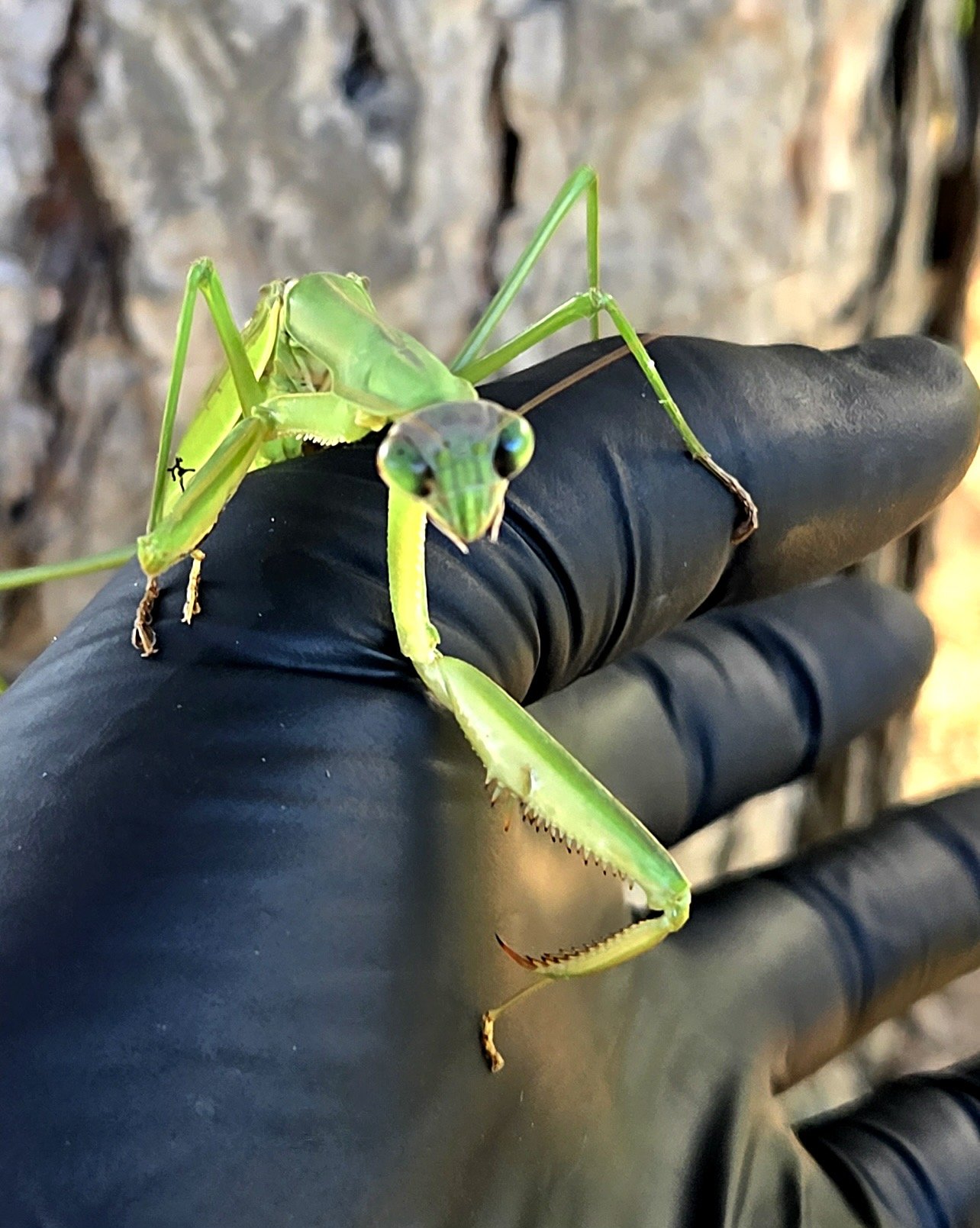

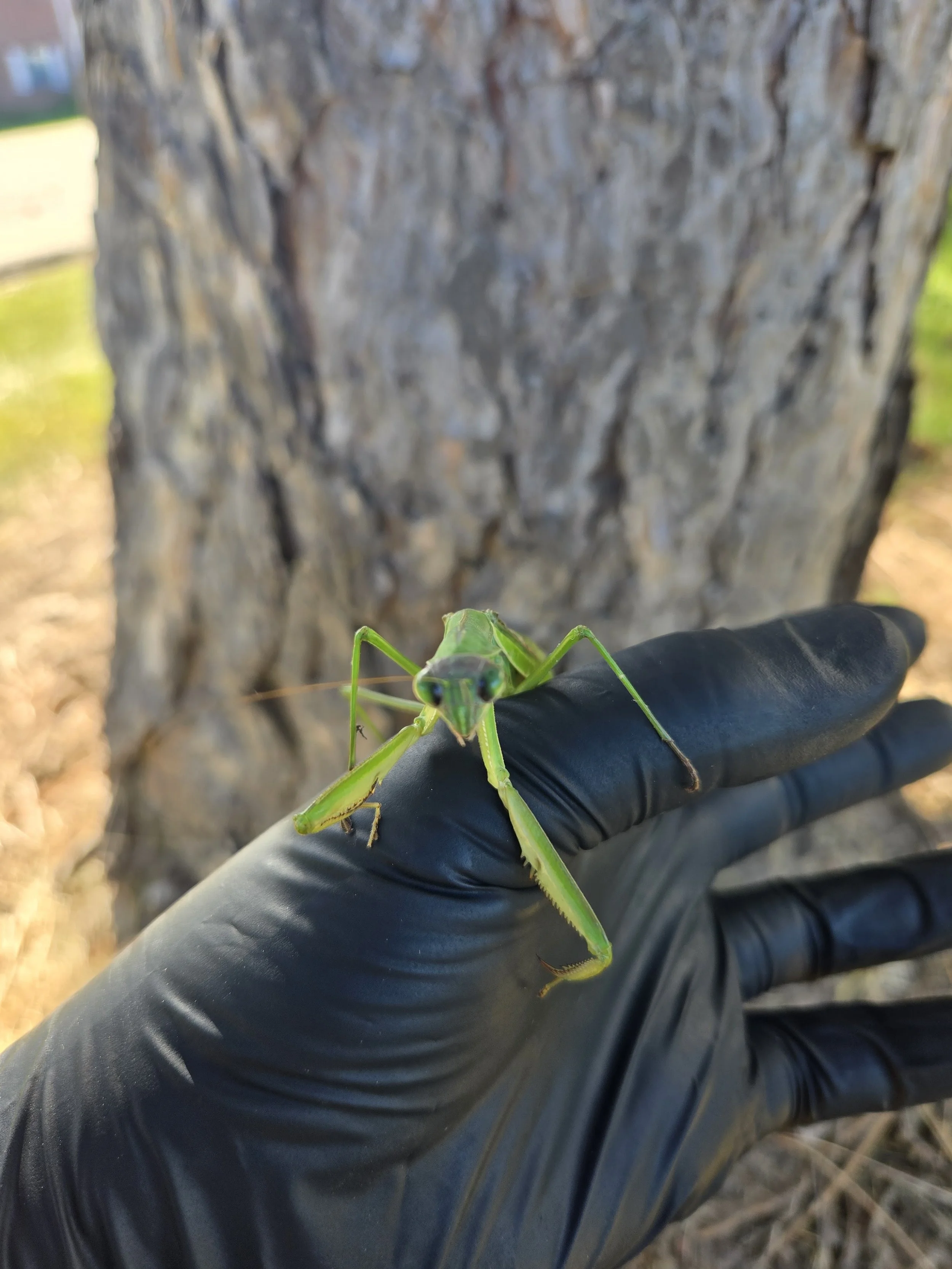
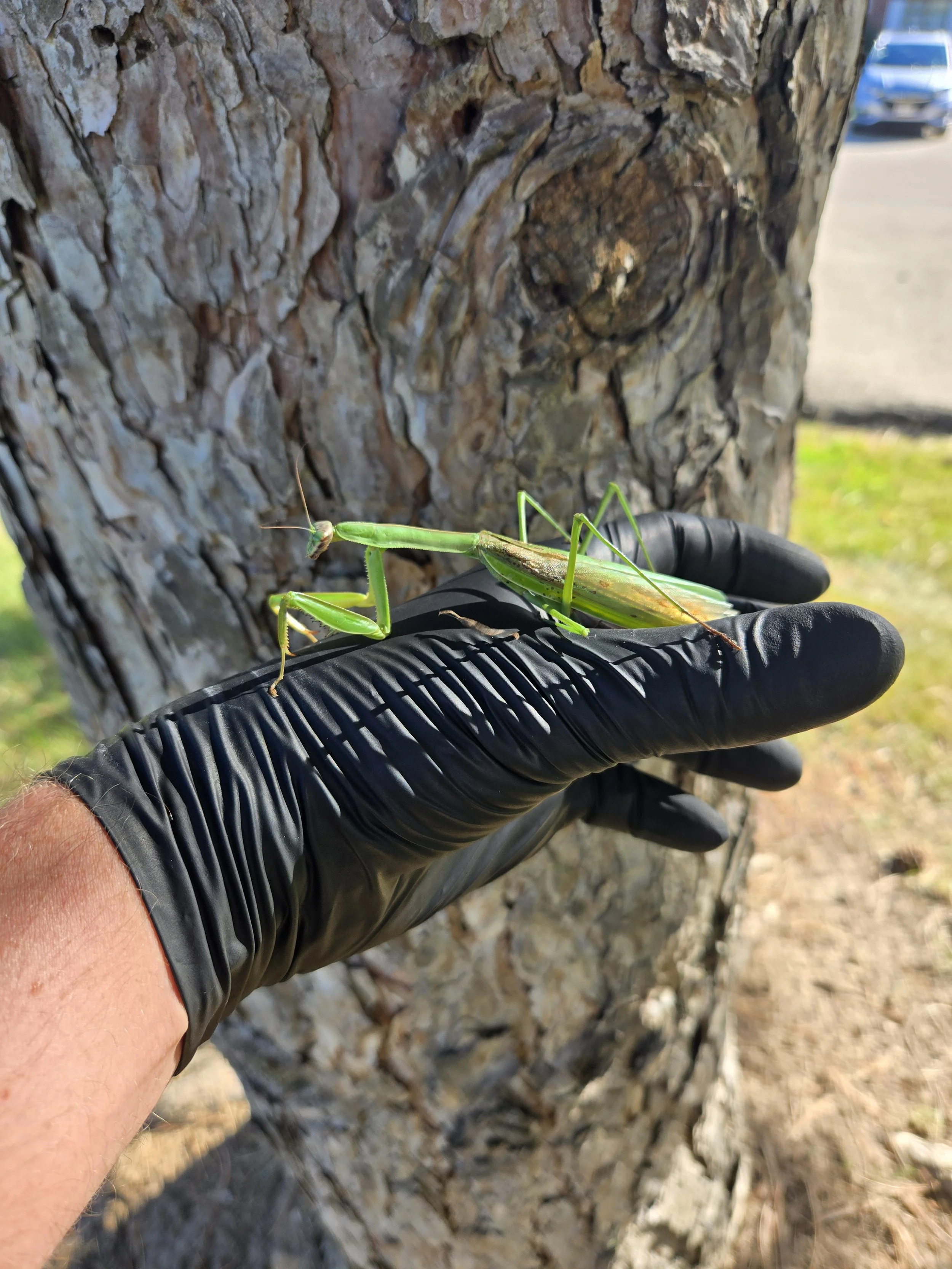
Walk through almost any Wisconsin garden in late summer, and you may spot one of nature's most fascinating predators. Standing perfectly still with folded front legs and swiveling triangular eyes, the Chinese mantis (Tenodera sinensis) looks almost alien. For many people, finding one is exciting. For others, it's a reason to grab the nearest shoe.
But should you?
The answer is more complicated than many people realize.
Chinese mantises are neither heroes nor villains. Like many introduced species, they provide real benefits while also creating ecological trade-offs. Understanding where they belong—and where they don't—can help homeowners make better decisions for both their gardens and Wisconsin's native wildlife.
How Did Chinese Mantises Get to Wisconsin?
As the name might suggest, Chinese mantises are not native to North America.
They originated in eastern Asia, including China, Korea, and parts of Japan. Around 1896, they were intentionally introduced into the United States near Philadelphia. At the time, scientists and gardeners believed they would serve as natural pest control by feeding on destructive insects in farms and gardens.
The introduction was well-intentioned. During the late 1800s and early 1900s, introducing beneficial predators was a common approach to biological pest management.
Over time, Chinese mantises spread throughout much of the eastern United States, including Wisconsin. Today they are one of the most commonly encountered mantis species in our state.
Why Are They So Popular?
It's easy to see why Chinese mantises have earned such a positive reputation.
They are among the largest insects many Wisconsin gardeners will encounter, with females often growing close to four inches long. Their incredible camouflage, slow deliberate movements, and lightning-fast hunting strikes make them fascinating to watch.
Despite their intimidating appearance, they are harmless to people and have long been admired as natural pest hunters. Because of this reputation, many gardeners purchase and release mantis egg cases each spring, hoping these remarkable predators will provide free, chemical-free insect control throughout the growing season.
While Chinese mantises certainly can help reduce some garden pests, their role in the landscape is far more complex than many people realize.
The Biggest Misconception
One of the biggest misconceptions about Chinese mantises is that they only eat "bad bugs." In reality, they are opportunistic predators that don't distinguish between pests and beneficial insects.
A mantis will readily eat grasshoppers, flies, and caterpillars, but it may also prey on honey bees, native pollinators, butterflies, lady beetles, and lacewings. Large female Chinese mantises have even been documented capturing hummingbirds at nectar feeders, although this is uncommon.
If a mantis can overpower it, there's a chance it will become its next meal. This indiscriminate hunting is one reason some ecologists discourage introducing additional Chinese mantises into native habitats.
The Benefits of Chinese Mantises
In moderate numbers, Chinese mantises can be a valuable addition to a healthy garden. As patient ambush predators, they feed on a wide variety of nuisance insects, including flies, moths, grasshoppers, crickets, certain caterpillars, mosquitoes, and some beetles. Rather than actively hunting, they rely on camouflage and remain motionless until an unsuspecting insect wanders within striking distance.
This hunting strategy allows them to quietly reduce populations of many common garden pests. For homeowners with vegetable gardens or ornamental landscapes, a few naturally occurring mantises can become beneficial members of the garden ecosystem, helping to control insects without the use of chemical pesticides.
“But They Also Eat the "Good Guys"
The very trait that makes Chinese mantises effective hunters is also what makes them controversial. They don't limit themselves to nuisance insects and will readily prey on many beneficial species that gardeners work hard to attract.
Honey bees, native bees, butterflies, moth pollinators, lady beetles, lacewings, hoverflies, and countless other helpful insects are all potential prey.
Large mantises often position themselves near flowering plants, patiently waiting for pollinators to visit blossoms before striking. While this behavior is perfectly natural, it can become problematic in gardens designed to support pollinators and native wildlife, where every bee and butterfly plays an important role in maintaining a healthy ecosystem.
These insects are some of the very species gardeners often work hard to attract.
Large mantises positioned near flowering plants may simply wait for pollinators to visit blossoms before capturing them.
Can They Eat Hummingbirds?
One of the most surprising facts about Chinese mantises is that they have occasionally been documented capturing hummingbirds.
While these incidents are rare, large female mantises have been observed ambushing hummingbirds at nectar feeders and flowering plants where the birds hover in predictable locations.
Using their powerful, spined front legs, a mantis can grasp and hold a hummingbird long enough to begin feeding. Although these encounters are uncommon and should not be considered typical behavior, they highlight just how opportunistic these predators are. If a Chinese mantis believes it can overpower something, it may attempt to make it its next meal.
Why Do Some People Say They Should Be Killed?
Chinese mantises have become the subject of debate because they are an introduced species rather than a native one.
Many conservationists and native plant enthusiasts discourage releasing or encouraging large numbers of Chinese mantises because they compete with native mantis species and prey on a wide variety of beneficial insects, including bees, butterflies, and other important pollinators.
The concern isn't that a single mantis in your backyard will harm the environment. Instead, it centers on the practice of purchasing and releasing non-native mantis egg cases, which can introduce hundreds of additional predators into an ecosystem that didn't naturally support that many.
This artificial increase in predator numbers has the potential to disrupt the balance of local wildlife, which is why many conservation organizations recommend against purchasing and releasing non-native mantis egg cases.
Should You Kill One If You Find It?
In most cases, the answer is no.
Finding a single Chinese mantis in your yard is not a reason to destroy it. Like many introduced species that have been established in North America for well over a century, Chinese mantises have become a common part of Wisconsin's landscape.
One individual is unlikely to have a measurable impact on the local ecosystem, and killing every mantis you encounter does little to benefit native wildlife. Instead, consider where it is living and what role it is playing in your garden.
In many situations, simply relocating the mantis to a more appropriate area is a better solution than eliminating it.
Wildflower Gardens vs. Vegetable Gardens
Whether a Chinese mantis is beneficial or problematic often depends on the type of garden it calls home.
In a pollinator or wildflower garden, the goal is to attract native bees, butterflies, and other beneficial insects that help support a healthy ecosystem. A large mantis stationed among flowering plants may spend much of its time catching the very pollinators you've worked hard to attract. In these situations, relocating the mantis to another part of your property can help protect those important insects without harming the mantis itself.
Vegetable gardens, however, have a different purpose. Here, the priority is often protecting crops from grasshoppers, caterpillars, beetles, and other chewing insects that can quickly damage vegetables. In this environment, a Chinese mantis is more likely to be an asset than a liability. While it will still eat a variety of insects, the benefits of having a natural predator helping to reduce pest populations often outweigh the drawbacks.
For many vegetable gardeners, a few naturally occurring mantises are welcome visitors.
Should You Buy Mantis Egg Cases?
Our recommendation is simple: probably not. This isn't because Chinese mantises are "bad" insects, but because Wisconsin already has well-established populations.
Purchasing and releasing additional egg cases can introduce hundreds of extra predators into an area that doesn't naturally support those numbers. Rather than improving pest control, this can increase pressure on bees, butterflies, and other beneficial insects.
A healthy garden depends on biodiversity, not an overabundance of a single predator. Encouraging birds, native spiders, ground beetles, lacewings, parasitic wasps, and other beneficial wildlife creates a more balanced and resilient ecosystem than releasing large numbers of non-native mantises.
WanderBug's Perspective
At WanderBug Pest Management, we believe the best pest management begins with understanding the role each species plays in our environment. Chinese mantises are remarkable insects that deserve respect, not fear. While they can be valuable predators in the right setting, they are not the miracle solution to garden pests that they're sometimes made out to be, nor are they destructive invaders that should be killed on sight.
If you find one hunting among your vegetables, it's likely providing more benefits than problems. If it's spending its days ambushing bees and butterflies in a pollinator garden, gently relocating it to another area of your property is often the better choice. Nature is rarely as simple as labeling an animal "good" or "bad." Healthy landscapes thrive because of balance, with predators, pollinators, plants, and countless other species all playing their part.
Sometimes the best form of pest management isn't deciding what should be eliminated—it's understanding how nature works and making informed decisions that benefit both your property and the environment. That's the philosophy we bring to every service we provide and every piece of advice we share.
References
Nyffeler, M., Maxwell, M. R., & Remsen, J. V. Jr. (2017). Bird predation by praying mantises: A global perspective. The Wilson Journal of Ornithology.
Penn State Extension. Praying Mantids.
University of Kentucky Entomology. Praying Mantids.
Wisconsin Department of Natural Resources. Native Pollinators and Garden Habitat.