
Millipede (Diplopoda)
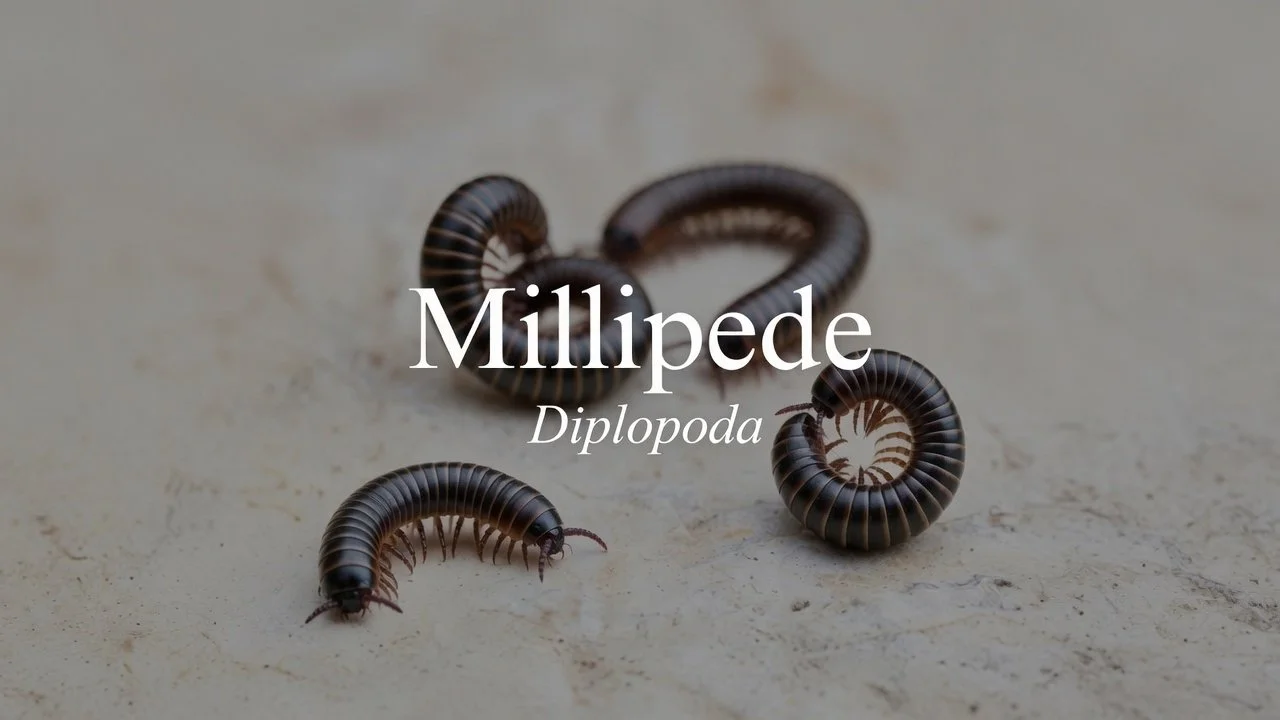
Quick Facts
Size: Typically ½ to 1¼ inches long
Color: Dark brown to black
Body: Cylindrical and segmented with two pairs of legs per body segment
Defense: Curls into a tight spiral when disturbed or when dying
Active: Primarily nocturnal; often found indoors in spring and fall
Common Locations: Basements, crawl spaces, ground-level rooms
Identification
These millipedes are dark, elongated, and cylindrical. When threatened or when they die, they curl into a tight coil or spiral. They move slowly compared to centipedes and have many small legs that appear to ripple as they walk. They are frequently found dead and curled up on basement floors.
Biology & Life Cycle
Millipedes feed on decaying plant material and organic matter. They require moisture to survive and usually live outdoors under leaf litter, mulch, or logs. Indoors they typically do not reproduce in large numbers and often die from the drier conditions. Invasions are usually seasonal.
Habitat
In southeastern Wisconsin they are commonly found in basements, crawl spaces, and lower levels of homes, especially after heavy rain or during seasonal moisture changes. Outdoor populations build up in mulch, leaf litter, and damp soil near foundations.
Signs of Presence
Live or dead millipedes on basement floors, often curled into spirals
Slow-moving dark segmented creatures near walls or in corners
Occasional sightings after rain or in damp weather
Health & Damage Concerns
Millipedes are harmless to people, pets, and structures. They do not bite, sting, or cause damage. Their presence is mainly a nuisance and often indicates excess moisture near the foundation or in the basement.
Prevention
Reduce moisture around the foundation and in the basement
Keep gutters clean and improve drainage
Move mulch and leaf litter away from the foundation
Seal gaps and cracks in the foundation and around doors
Use a dehumidifier in damp basements
When Professional Help Is Useful
When large numbers of millipedes repeatedly appear indoors despite moisture and exclusion efforts, a professional can help identify entry points and contributing conditions around the property.
Local Notes – Southeastern Wisconsin
Small dark millipedes that curl into spirals are a regular seasonal visitor in basements across southeastern Wisconsin. They are most noticeable in spring and fall when outdoor moisture levels change and individuals wander indoors, where they often die and are found curled on the floor.