
What I Found in My Garage: Three Vintage Pesticides That Tell the Story of American Pest Control
Every now and then, while inspecting a basement, garage, barn, or shed, I come across something unexpected.
Usually it's an old mouse trap, a forgotten wasp spray, or a dusty box that's been sitting on a shelf for decades. But once in a while, I find something that feels more like opening a time capsule than performing a pest inspection.
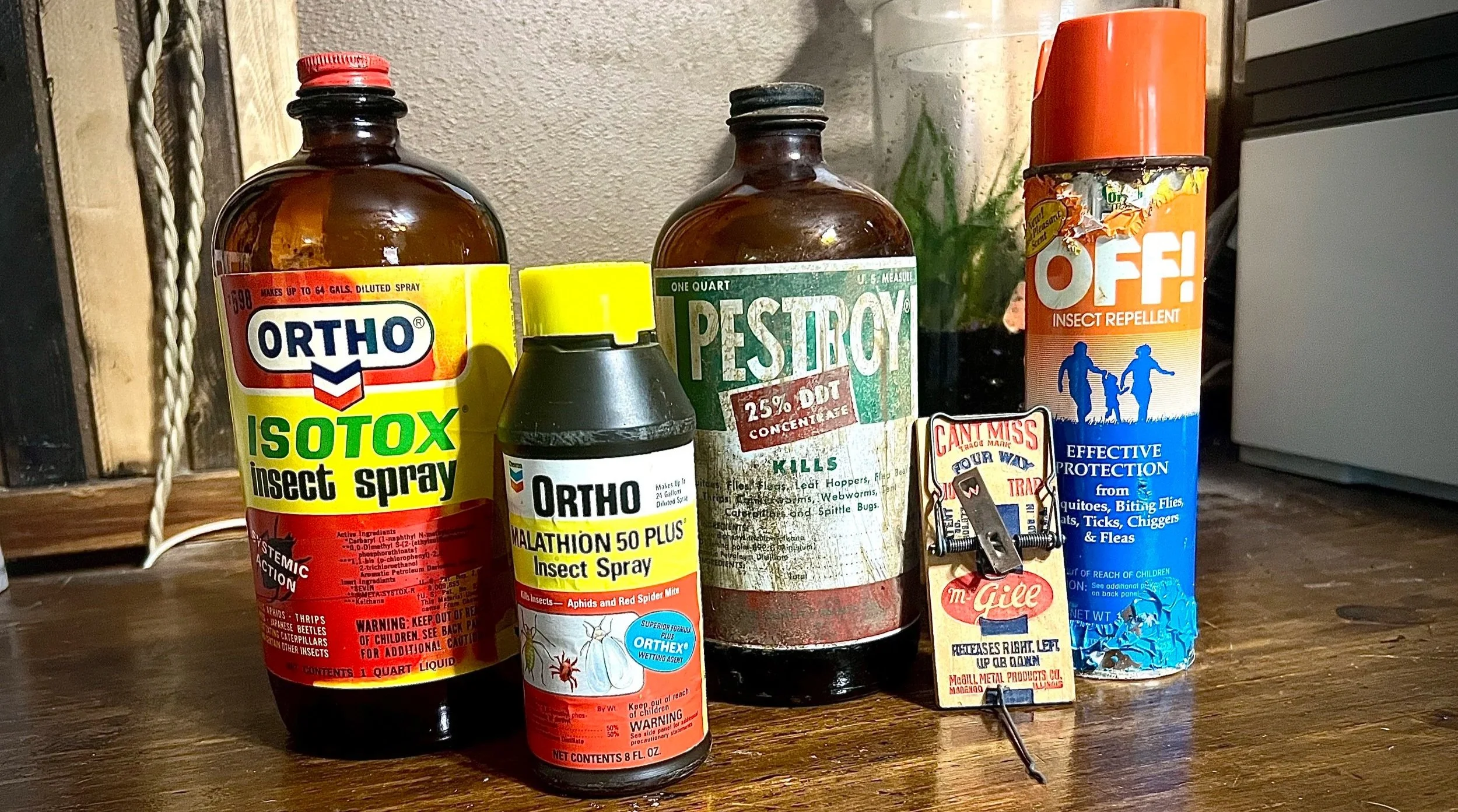
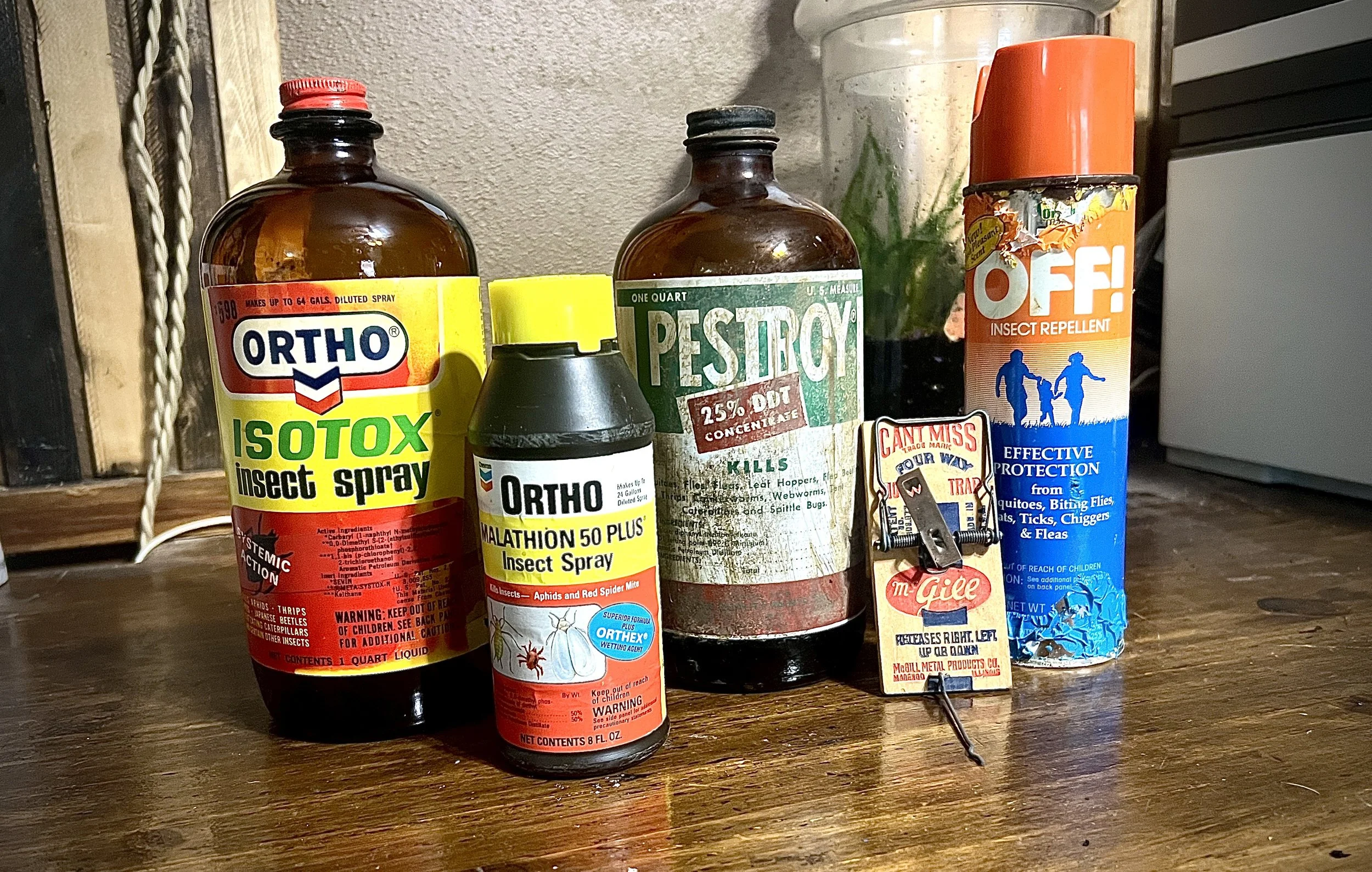
Recently, I came across several vintage pesticides in my grandparents garage and I thought, looking at these bottles is a fascinating reminder of how much the pest control industry has changed over the last 70 years.
Some of these products were considered revolutionary. Some were eventually banned. Others are still around today in one form or another. Nearly all of them tell an interesting story.
Let's take a look.
1. Pestroy 25% DDT Concentrate
Approximate Era: 1950s–1960s
If there was ever a "rock star" of old pesticides, this is it.
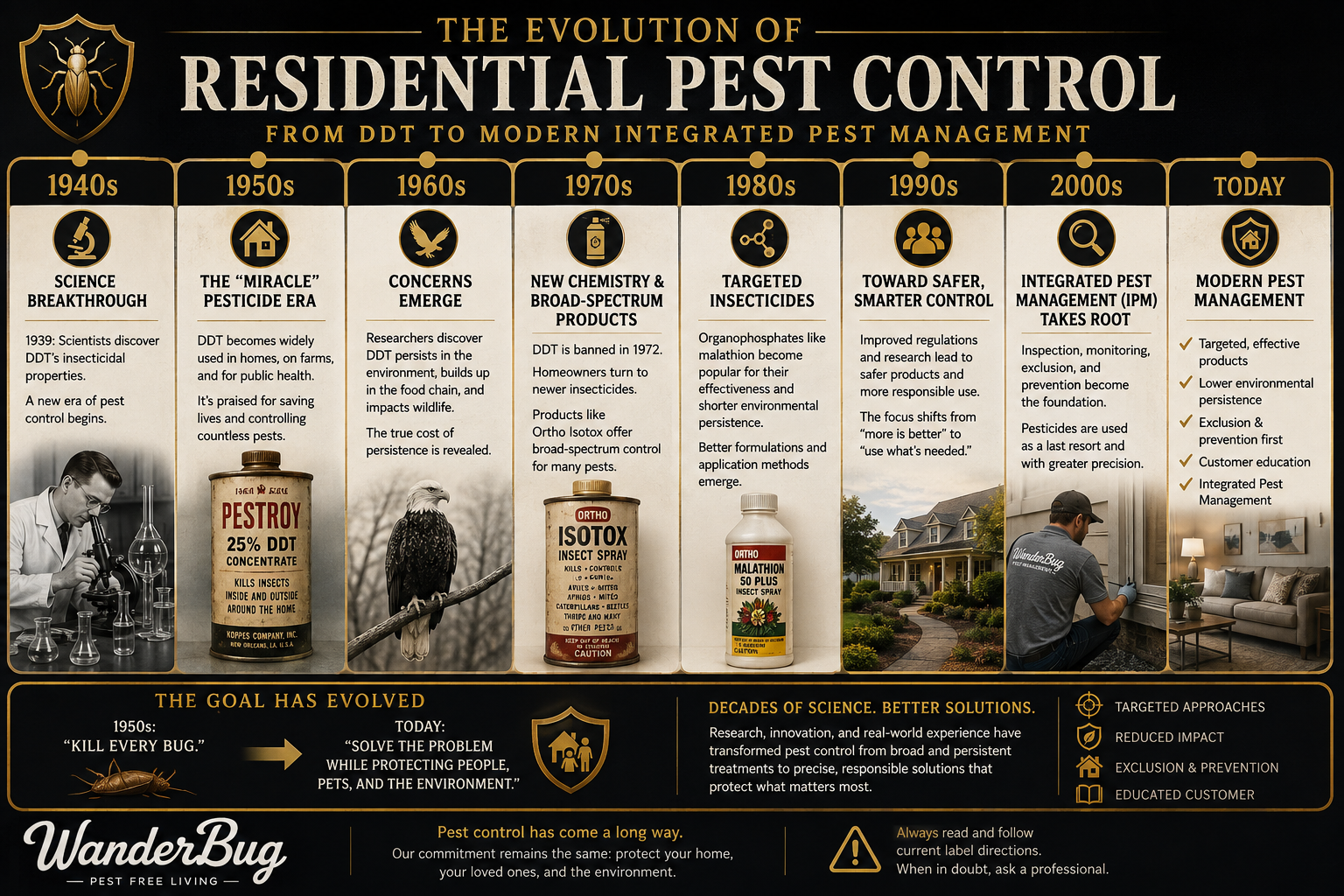
For decades, DDT was considered one of the greatest scientific breakthroughs in pest control. Following World War II, it was used almost everywhere. Homeowners sprayed it around foundations, gardens, barns, and sometimes even inside their homes. Farmers relied on it. Public health officials used it to control mosquitoes carrying malaria, and military personnel used it to combat lice and typhus.
At the time, it was viewed as nothing short of miraculous.
And to be fair...
It worked.
Really well.
The problem wasn't effectiveness—it was persistence.
Unlike many modern pesticides that break down relatively quickly, DDT remains in the environment for years. It accumulates in wildlife, concentrates as it moves up the food chain, and contributed to dramatic declines in birds of prey such as bald eagles and peregrine falcons. By 1972, nearly all uses of DDT had been banned in the United States.
Today, finding a bottle like this is more of a historical curiosity than anything else.
Can you still buy it?
No.
Would I ever recommend using it?
Absolutely not.
But from a historical standpoint, it's one of the most important pesticides ever developed.
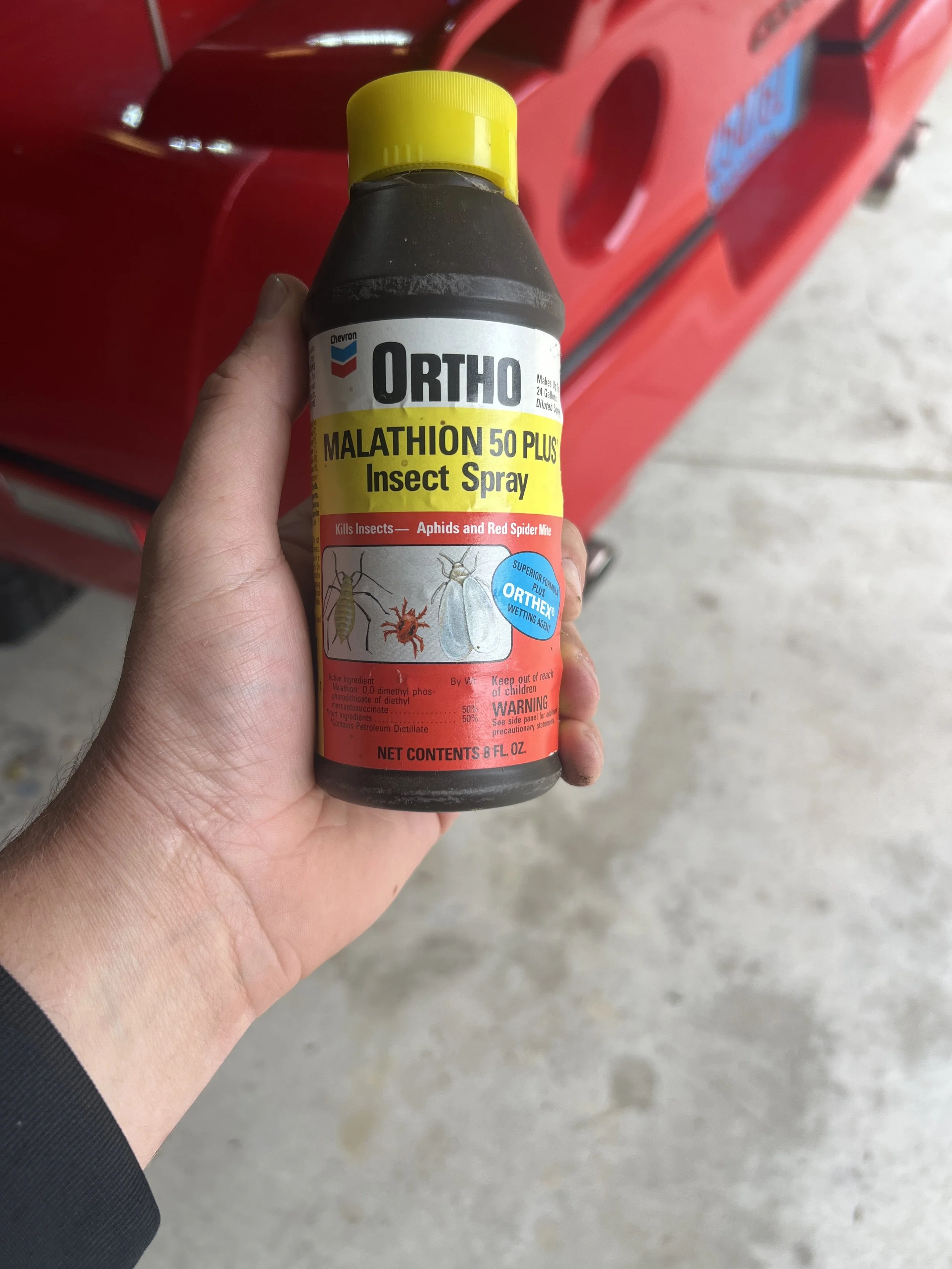
2. Ortho Malathion 50 Plus
Approximate Era: Late 1980s–Early 1990s
Unlike DDT, malathion hasn't disappeared.
It's still used today in certain agricultural applications and public health mosquito control programs, although many of the older homeowner products have long since disappeared from store shelves.
Malathion belongs to a class of pesticides known as organophosphates. When it was introduced, it represented a shift toward pesticides that didn't remain in the environment nearly as long as products like DDT.
Gardeners loved it.
It controlled aphids, mites, whiteflies, scale insects, and dozens of other common garden pests.
It also had one unforgettable characteristic...
If you've ever opened an old bottle of malathion, you probably remember the smell.
Let's just say it wasn't anyone's favorite fragrance.
Although modern formulations and integrated pest management strategies have reduced reliance on products like this, malathion still has a place in professional and agricultural pest control under certain circumstances.
3. Ortho Isotox Insect Spray
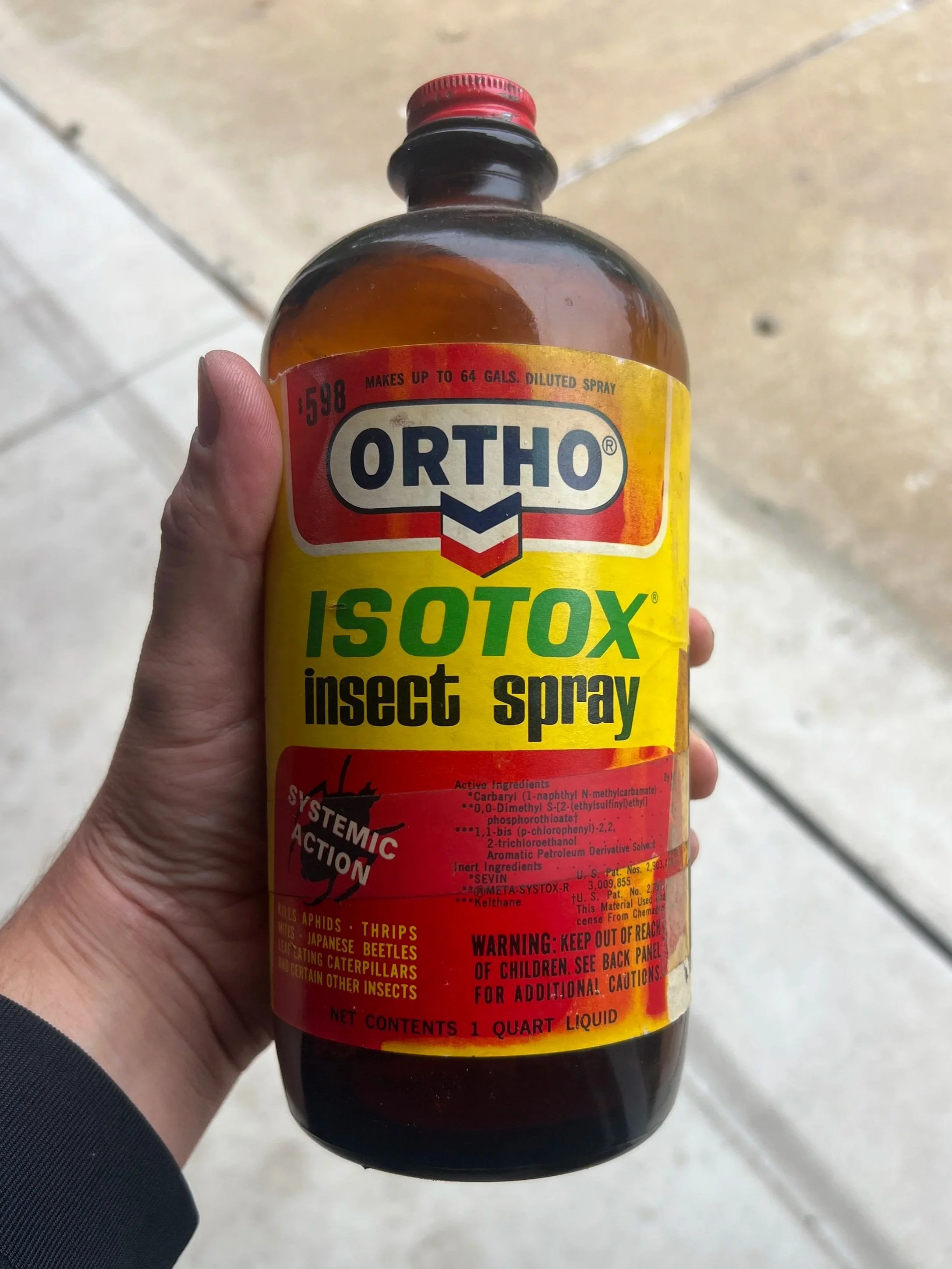
Approximate Era: 1970s
This bottle is probably my favorite.
Not because I'd ever use it...
But because it perfectly represents an era of pest control where manufacturers seemed to believe more active ingredients meant better results.
This formulation combined multiple insecticides and miticides into a single bottle, giving homeowners broad-spectrum control over aphids, mites, caterpillars, Japanese beetles, thrips, and numerous other garden pests.
And honestly...
It probably worked extremely well.
Looking at labels like this reminds me just how different pesticide regulations were only a few decades ago.
Many ingredients that were once common have since been cancelled, restricted, or replaced by products with improved safety profiles and lower environmental persistence.
It's a fascinating snapshot of how both science and regulation have evolved.
4. OFF! Insect Repellent
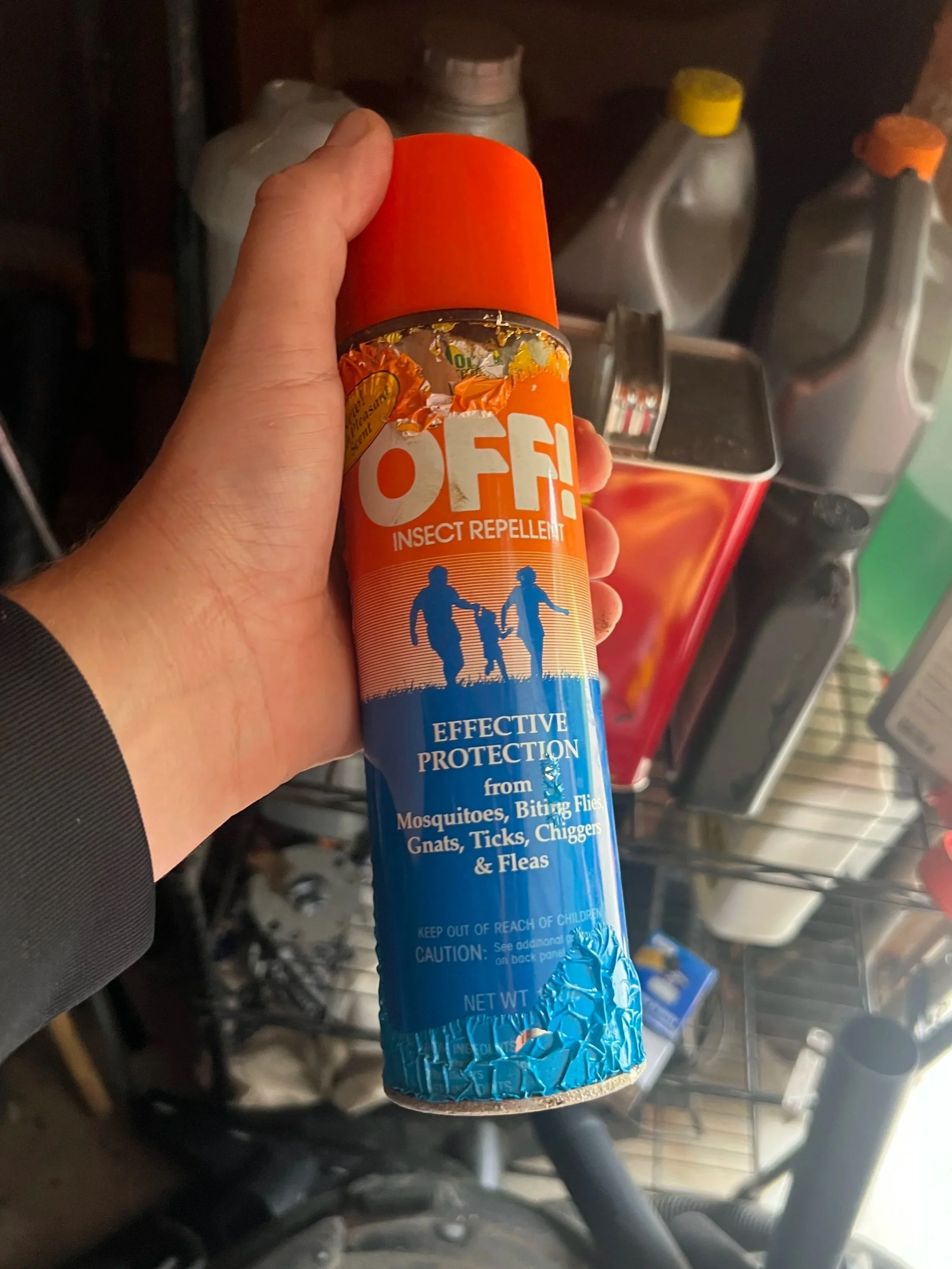
Approximate Era: Late 1970s–1980s
Unlike many of the other products in this collection, OFF! wasn't designed to kill insects—it was designed to keep them away.
For generations, families packed a can of OFF! for camping trips, fishing weekends, backyard barbecues, and evenings at the cabin. Long before wearable repellents and battery-powered mosquito devices became common, an aerosol can like this was a summer staple.
For those of us here in Racine, Wisconsin, there's another interesting connection. OFF! is one of the many well-known brands developed by SC Johnson, a company that has called Racine home for well over a century. From insect repellents to household cleaners, generations of local families have known the Johnson name, making this old can feel like a small piece of hometown history as much as a piece of pest control history.
The active ingredient in most vintage OFF! products was DEET, a repellent developed by the U.S. Army in the 1940s and introduced for civilian use in the 1950s. Rather than killing mosquitoes and ticks, DEET works by interfering with the insects' ability to locate people.
What's remarkable is that while many insecticides from this era disappeared from store shelves, DEET has stood the test of time. Modern formulations are still widely recommended because decades of research have shown it remains one of the most effective ways to prevent mosquito and tick bites when used according to the label.
Finding an old can like this is a reminder that not every vintage pest-control product became obsolete. Sometimes, good science simply endures.
So...Did These Products Actually Work?
Many older pesticides were incredibly effective.
Sometimes almost unbelievably effective.
The reason many disappeared wasn't because they failed to control pests.
Instead, researchers discovered long-term environmental impacts, toxicity concerns, bioaccumulation, groundwater issues, resistance development, or risks to non-target organisms such as birds, fish, pollinators, and beneficial insects.
Modern pesticides are certainly not perfect, but they're generally far more targeted than many of their predecessors.
Today's pest management also emphasizes inspection, exclusion, sanitation, habitat modification, monitoring, and applying the right product only when it's truly needed.
In many ways, we've shifted from simply asking:
"What kills the bug?"
to asking:
"What's the safest and most effective way to solve the problem?"
"It's Old...Does That Mean It Doesn't Work?"
This is one of the biggest misconceptions I hear.
People often assume that because a pesticide has been sitting on a shelf for thirty or forty years, it's automatically harmless or ineffective.
Not necessarily.
Many concentrates remain chemically active for years if they've been stored properly.
That doesn't mean they're safe—or legal—to use.
An old bottle may contain an active ingredient that's no longer registered for residential use, have outdated application directions, or be stored in a container that's beginning to fail.
Age alone isn't what makes an old pesticide risky.
It's the uncertainty.
If you don't know exactly what it is, how it's changed over time, or whether it's still legal to use, it's best to leave it alone until you know more.
“I Found Old Pesticides in My Garage. Now What?”
Finding an old pesticide in a garage, basement, shed, or barn is surprisingly common—especially in older homes.
Here's what I recommend:
Leave the product in its original container whenever possible.
Don't pour it down a drain, onto the ground, or into a storm sewer.
Don't combine multiple chemicals into one container.
If the container is leaking, carefully place it inside a larger plastic container or heavy-duty bag until it can be disposed of safely.
Keep children and pets away from old chemicals.
When in doubt, contact your local Household Hazardous Waste (HHW) program before attempting disposal.
If you're not sure what you've found, take clear photos of the front and back labels. Those labels often provide enough information to identify the active ingredients and determine the safest next step.
Local Disposal Resources for Southeastern Wisconsin
If you're in the areas WanderBug proudly serves—including Racine, Mount Pleasant, Caledonia, Sturtevant, Kenosha, Somers, Pleasant Prairie, Burlington, Union Grove, and surrounding communities—you have disposal options available.
Most old pesticides and herbicides should be taken to a Household Hazardous Waste (HHW) collection site or seasonal collection event rather than thrown in the trash.
RACINE HAZARDOUS WASTE RESOURCES —- CLICK HERE
Racine, Caledonia, Elmwood Park, Mount Pleasant, North Bay, Sturtevant & Wind Point HAZARDOUS WASTE RESOURCES —- CLICK HERE
KENOSHA HAZARDOUS WASTE RESOURCES —- CLICK HERE
KENOSHA WATER UTILITY HAZARDOUS WASTE RESOURCES —- CLICK HERE
MT PLEASANT HAZARDOUS WASTE RESOURCES —- CLICK HERE
UNION GROVE/ BURLINGTON HAZARDOUS WASTE RESOURCES —- CLICK HERE
Your county or municipality can provide current information on accepted materials, collection dates, and drop-off locations. Some communities operate permanent facilities, while others host scheduled collection events throughout the year.
Because these programs occasionally change locations or schedules, it's always a good idea to check with your local public works department or county recycling office before making the trip.
Why I Love Finding These
As strange as it sounds...
I genuinely enjoy coming across old pesticide bottles.
Not because I want to use them.
Not because I collect them.
But because each one tells a story.
They remind us where the pest control industry started, how much we've learned over the years, and how dramatically our approach to protecting homes has evolved.
As a pest management professional, finding something like a dusty bottle of DDT tucked away on a basement shelf is like discovering a small piece of history.
It's a reminder that today's best practices didn't appear overnight.
They're the result of decades of research, changing regulations, better chemistry, and a growing understanding of how to balance effective pest control with human health and environmental responsibility.
Final Thoughts
The next time you're cleaning out your garage or basement and stumble across a mystery bottle that's older than your first car, resist the temptation to simply throw it away—or worse, use it.
Take a closer look.
You might be holding a fascinating piece of American pest control history.
And if you're not sure what you've found, I'd be happy to help identify it.
Sometimes the oldest bottles tell the best stories.